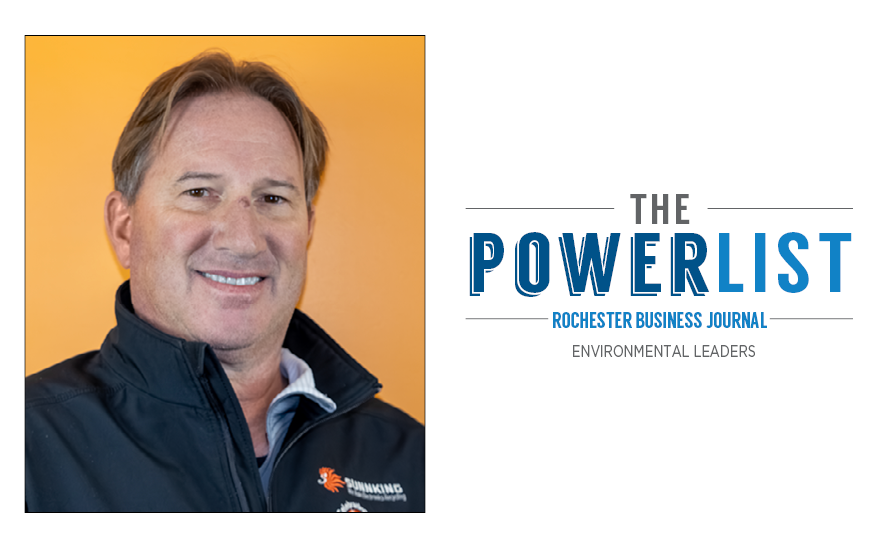
CEO, Sunnking
Years in current role: 26
What sustainability initiative or environmental goal has your organization made the most progress on in the past year?
This year has been all about scale and deeper community engagement. We processed nearly 26 million pounds of electronics, pushed Eco-Park e-waste volume up 10 percent, and saw double-digit growth in residential participation in community e-waste drop-off. On the business side, B2B engagement is now up more than 300 percent over the last decade. We’ve increased refurbished and redeployed devices by 25 percent year-to-date, directly improving reuse rates. We also exceeded several 2024 ESG benchmarks with higher overall volume and reduced greenhouse emissions driven by new internal policies and efficiency upgrades. And with a new shredder boosting throughput 40 percent (and another on the way) we’re positioned to divert even more material from landfills.
What gives you confidence about how Rochester businesses and institutions are addressing environmental challenges?
Rochester gives me confidence because the region is backing sustainability with real infrastructure and follow-through. Monroe County’s commitment to accessible recycling — especially through Eco-Park — plays a huge role, and Sunnking is a core part of making that work. Our partnership keeps electronics, batteries and other hard-to-handle materials out of landfills and gives residents and businesses a dependable way to recycle responsibly. At the same time, the city is upgrading its own sustainability practices, and research from SUNY ESF’s Center for Sustainable Materials Management is helping organizations make smarter decisions around waste and circular-economy planning.
What area do you think needs more attention or collaboration to strengthen Rochester’s environmental future?
Rochester has the right systems in place, but the biggest gap is still awareness and coordination. We have strong infrastructure for recycling and safe disposal, yet a lot of residents and businesses either don’t know their options or aren’t using them consistently. E-waste is a perfect example. Sunnking handles huge volumes every year, but there’s still a ton of outdated tech sitting in closets or ending up in the wrong waste stream. The region would benefit from tighter collaboration between local governments, schools, businesses and recycling partners to educate people, simplify access and build habits around proper disposal and reuse. If we put as much energy into outreach as we do into the physical infrastructure, the impact would jump fast.
What advice would you offer to individuals or organizations that want to start making a measurable environmental difference?
Start by focusing on the things you can control right away. For individuals, that means getting old electronics, batteries and other hazardous materials into the right recycling stream instead of letting them sit in a drawer or end up in the trash. You can drop them off at Eco-Park, community collection events, or directly at Sunnking’s facilities during our public drop-off hours. For organizations, the biggest impact comes from treating sustainability as part of day-to-day operations: set simple goals, track your waste diversion, and work with recyclers who can help you stay compliant and document your progress. It doesn’t have to be complicated — steady habits make the difference.
What’s your favorite way to enjoy the natural beauty of the Rochester area?
For me, it starts with the lakes. Lake Ontario is one of the most beautiful freshwater coastlines in the country, and being able to enjoy it right here in Rochester is something I never take for granted. And then there’s the Lilac Festival. Walking through Highland Park when the blooms are at their peak is the perfect reminder of why this is the Flower City — it’s our community celebrating the landscape that makes this place special.

 Sign In
 Free Newsletter


 Listen to this article