Sign In
Upcoming Event
 Free Newsletter

‘Patina extrem:’ What Berlin reinforced about Rochester’s next chapter

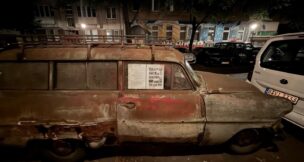
Patina extrem car. (Photo provided by Shannon Ealy)
Patina extrem car. (Photo provided by Shannon Ealy)
‘Patina extrem:’ What Berlin reinforced about Rochester’s next chapter


 Listen to this article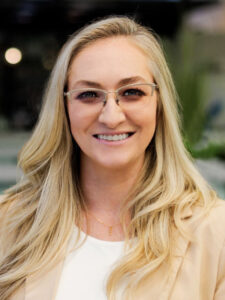
A few blocks from the apartment we rented in Berlin sat an old, very rusty car. It was parked on a leafy neighborhood side street with busy cafes and young people spilling outside to watch the World Cup.
At first glance, I thought it had been abandoned. But then I saw several pieces of paper taped inside the window. Curious, I pulled out Google Lens to translate. They included the car’s model, ownership history, and the philosophy behind the German phrase Patina extrem: preserving signs of use, rust, dents, and the marks time leaves behind.
Only strictly necessary maintenance was done to keep it running. The papers also noted that, because of its condition, the car had run into issues with authorities. But for now, it remains tolerated on the streets of Berlin.
The car was one-third museum, one-third street art, and one-third mode of transportation. And over the course of a week exploring Berlin, it became an interesting reflection point for the city, and cities in general.
I was there for personal reasons, but when your work involves understanding why people choose one place over another, it is hard not to study one of the world’s most dynamic capitals when given the chance.
I expected to be inspired by placemaking; how Berlin activates its Spree River and canals and uses them as economic and neighborhood drivers.
And I did. The lively street cafes and spätis. People sitting along the river on a hot day with a crisp Kölsch. Informal music and activity filling public spaces. Countless tour boats serving currywurst and Aperol spritzes to tourists and groups of lively German revelers, explaining centuries of history as they glided past stunning palaces and brutalist architecture.
It is impossible to spend time there without feeling the city’s complexity, just as it is impossible not to notice the graffiti that covers nearly every surface in many neighborhoods. Most of the city was leveled during World War II. Post-war, it was occupied by the Allies, divided into East and West Berlin during the Cold War, and reunited fewer than 40 years ago.
The historic buildings that remain still show evidence of the past, including the bombed-out Kaiser Wilhelm Church in the heart of the downtown business and shopping district. Much of the Berlin Wall still stands, reclaimed by public art. Former industrial spaces have become places for culture, business and community, and new layers of glass, steel and modern design have become part of the skyline.
What became clear is that Berlin’s past is not something the city moved beyond. It is very much a part of what makes it distinct.
As part of the Regional Revitalization Partnership, OneROC’s work focuses on how we can leverage the incredible assets Rochester already has — our Riverway, historic buildings, neighborhoods, innovation ecosystem, and creative community — to support the region’s next chapter.
Our histories are obviously very different, but Rochester is also a city shaped by transformation. We’re a place that helped define an era of global innovation and industry, experienced great wealth and explosive growth, navigated periods of disruption, and are now actively writing our next chapter. The question is not how we recreate what we were, but how we use what we have now.
Sections of the Berlin Wall ran along the Spree. The river was not always a gathering place – it was, quite literally, a dividing line. Today, people sit, eat, drink, listen to music, and spend time in places they once could not cross.
Rochester has its own river story. The Genesee powered the growth of our city, but for generations much of our relationship with it was industrial rather than experiential.
That is now changing. Through investments like ROC the Riverway, including ROC City Skatepark, Austin Steward Plaza, the Promenade, the Riverway Convention Center, and continued downtown activation, we have an opportunity to reconnect people with one of Rochester’s defining assets.
At a nearby cocktail bar, the owner spoke about how Berlin’s affordability and available space helped create an environment where artists and people looking for a different way of life could live cheaply, experiment boldly and connect with others doing the same.
From one cultural lens, it’s easy to see rampant graffiti and immediately think of disinvestment or disrespect. But after a few days in Berlin, I started seeing that creative energy was everywhere – not just in galleries and formal cultural spaces, but on streets, buildings, and unexpected corners of the city.
My partner, an avid street art fan, stopped every few feet to photograph another piece. Just as with Toronto’s Graffiti Alley, numerous locations that could have been dismissed as places to avoid become destinations.
Rochester understands this too. The old subway, though not formally accessible today, became a world-renowned street art destination precisely because people saw possibility in an unexpected place. Wall\Therapy transformed blank walls into landmarks. Artists like Sarah Rutherford, Shawn Dunwoody, Dellarious, Aerosol Kingdom, and the FUA Krew continue that legacy today.
The connection between culture and economic growth came through clearly in my conversation with Sandra and Gerrit at Berlin Partner, the city’s economic development agency, about Berlin’s strengths in industries including optics, microelectronics, and quantum.
From the city’s creative identity to places like Adlershof, where historic science and research assets have evolved into a major technology district and neighborhood, Berlin’s innovation economy is not separate from its broader story of reinvention.
The qualities that attract people, vibrant neighborhoods, gathering places, culture, density, and a sense of possibility, are increasingly the same qualities that attract companies and talent.
We still have something in Rochester that many larger, more expensive cities (including, increasingly, Berlin) have less of — space.
Space in historic buildings. Space along the river. Space in neighborhoods with character. Space for people with ideas to make them reality.
That kind of openness can be easy to undersell, because it requires people to see potential before all the traditional signals are there. But for the right small business owner, artist, founder, developer, or creative person looking for a place where their work can actually shape the fabric of a city, it can also read as possibility.
That idea is at the heart of how we have been thinking about Rochester’s story through the Greater ROC “Iconic: Then. Now. Next.” campaign.
Our “then” is undeniable. We’re a city and region that helped shape the world through innovation, creativity, and entrepreneurship. Our “now” is about recognizing the people and places already creating momentum. And our “next” will come from inviting more people to see what is possible here and giving them the space to help create it.
I went to Berlin looking for lessons in placemaking and ecosystem development. I came home thinking more about how cities create the conditions for people to bring places to life.
Rochester does not need to become Berlin (although I wouldn’t mind our own Berghain – looking at you, Chuck Cerankosky.) It’s clear that no successful city becomes great just by copying another. The strongest cities understand their own story and create opportunities for more people to become part of authoring what comes next.
And the good news is, Rochester is already doing this. Across our economic development, tourism, business, arts, and community partners, we are telling a stronger story about who we are and what is possible here. Now the work is to keep going – to be bolder, more coordinated, and more confident in inviting people to see the opportunity for themselves.
Maybe that is the lesson of Patina extrem, and of Berlin: the most interesting places are rarely the most polished. They are the places where history, creativity, and the people who call them home are allowed to leave their mark.
Shannon Ealy is Vice President of Innovation at OneROC, where she aligns partners, strategy, and investment across Greater Rochester’s economic development ecosystem, and serves as Deputy Regional Innovation Officer for the NY SMART I-Corridor Tech Hub, strengthening the semiconductor workforce and supply chain across Buffalo, Rochester, and Syracuse.
t