Sign In
Upcoming Event
 Free Newsletter

Side effect of NY auto insurance reform: Costly lawsuits to prove damages
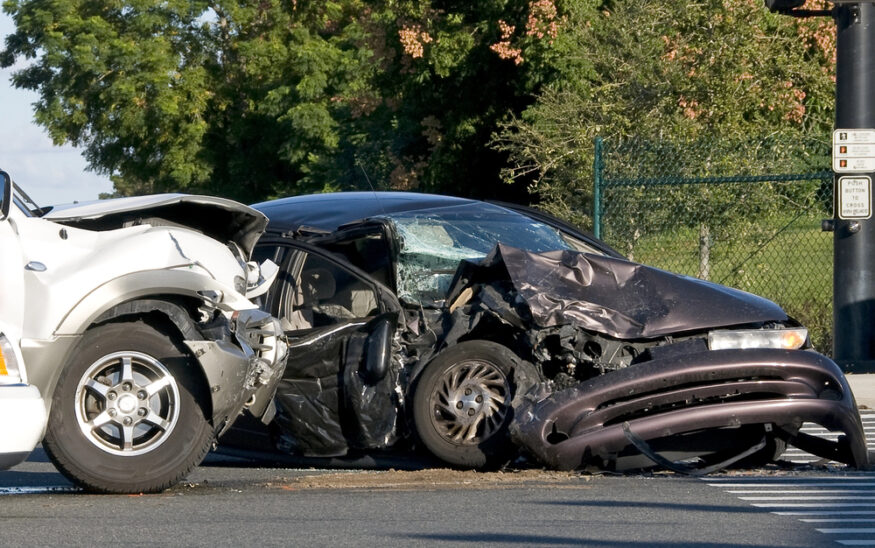
(Depositphotos)
(Depositphotos)
Side effect of NY auto insurance reform: Costly lawsuits to prove damages


 Listen to this article
Summary:
- Attorney John Richmond explains increased litigation costs post-reform
- Elimination of 90/180 rule complicates injury compensation
- Comparative negligence removed, raising fault determination disputes
- Some legitimate claims now face greater hurdles
Bringing to trial personal injury lawsuits arising from auto accidents will be more expensive and require a great deal more investigative work now that New York insurance reforms have become law.

Consumers are expected to see a savings on insurance premiums, thanks to passage of the legislation that was aimed at reducing fraudulent claims.
But John Richmond, CEO and co-founder of personal injury law firm Richmond Vona, LLC, said persons legitimately injured in an auto accident may face greater hurdles when seeking compensation.
“Everything was advertised as, ‘We want to lower your car insurance rates,’ ” said Richmond, a 2002 graduate of Greece Athena High School. “I’m like everyone else, I want my rates to be lower, too. But litigation costs in fraud in car accident cases are only one factor that contribute to higher car insurance premiums.”
The repercussions, he said, will be felt by “people who are legitimately injured in car accidents.”
That’s because of three major changes in the law:
Elimination of the ’90/180′ rule.
Under the old law, a person legitimately injured and not at fault who couldn’t go to work and perform normal duties for at least 90 of the first 180 days after an accident could seek compensation.
The lingering issues could have been because of a concussion, certain sprains or strains, or even the exacerbation of old injuries, said Richmond, whose firm is headquartered in Buffalo and has an office in Rochester.
Elimination of the 90/180 rule “makes it much, much harder for law firms like mine to get justice from the other insurance company for these people,” Richmond said. “Maybe the offer us pennies on the dollar or they say go ahead and sue us and now it’s even more litigation.”
No more comparative negligence.
Before the new legislation became law on May 26, a driver deemed to be more than 50 percent responsible for the crash could still recover compensation from the insurance company.
“We believe that’s really fair,” Richmond said. “If you’re in an accident and your injuries are deemed to be worth $100,000, but you are 60 percent at fault, you can still recover $40,000.”
Now if a driver is deemed to be more than 50 percent at fault, there is no compensation.
This will lead to a great deal of time and expense spent on investigators and accident reconstruction experts in order to determine percentage of fault, Richmond said.
“It can be one of these close calls at an intersection or two cars merging,” he explained, “and they say this person is 51 percent at fault, so then there’s no recovery; that’s it, period. You can be permanently injured but there’s no recovery.”
That means a great deal of advance work before a firm even agrees to take on the case, followed by the deployment of investigators and experts.
“The determination of fault is already a back and forth between the insurance company and our law firm or another personal injury law firm,” Richmond said. “In the past, they (insurance companies) would concede things. I’m guessing now they won’t be conceding as much because we have to prove this.
“Ultimately, there will be more lawsuits. You’re going to leave it in the hands of the jury to decide who’s at fault, which is why, now more than ever, it’s really important that you’re careful about the law firm you choose. Make sure they work with the best investigators, the best experts, with the best resources.”
Noneconomic loss is capped at $100,000 for a person committing or fleeing from the commission of a felony, or if operating an uninsured vehicle.
The example Richmond used:
“If you’re injured in an accident and you’re zero percent at fault — you’re sitting at a red light and get rear-ended at 70 mph by a drunk driver — if you do not have auto insurance at the time of that accident, there’s a cap on your damages,” Richmond said.
“Now, we’ve all been in this, whether it’s car insurance or something else; you tie a credit card to something and it’s on auto pay and your card expires, and you miss the email that’s going to your Gmail and you totally miss the notification.
“If your insurance has been expired for one month — just one minute after one month — there’s a cap on the amount of money you can recover. There’s no cap on economic loss but for pain and suffering it’s $100,000, even if you’re paralyzed from the waist down.”
So what will the new law mean for drivers? Consumers should see a reduction in auto rates, though it may take 12 to 18 months.
Florida and Georgia recently enacted auto insurance reform. The office of Florida Gov. Ron DeSantis announced that the five leading insurers in the state cut premiums by an average of 6 percent in 2025. In Georgia, Gov. Brian Kemp’s office said Allstate Insurance Co. trimmed rates 5 percent and Travelers Insurance went down 10 percent.
Fleet operators also have benefited. The Atlanta Rapid Transit Authority saved $2.8 million in casualty and liability expenses, Kemp’s office said.
It stands to reason there will be some sort of savings in New York for municipalities, freight carriers and even small businesses with a fleet of vehicles.
But for personal injury law firms — and there are many just in Rochester — each potential case now will be scrutinized to an even greater degree.
“For certain people, we’re just going to have to tell them, ‘We can’t help you. We used to be able to but now we can’t and this is why,’ ” Richmond said. “We want to help everybody but we have to make business decisions.”
For the persons they can help, the net compensation could be reduced by the costs of the case.
“What’s going to change in certain cases is the amount of money that law firms have to spend on investigations and experts to ensure that they can get justice for their clients,” Richmond said. “Ultimately the way it works in New York, those expenses come out of the client’s portion of the net proceeds, it does not come out of the attorney’s fees. We’re fronting the money.
“If clients want to, they can elect to front all of the expenses. If you can imagine, most people don’t select that option because they don’t have the cash to lay out and they’re taking a lot of risk if it doesn’t work out. If we front it, it comes out of their end, but if we lose, they don’t owe anything.”
[email protected]/(585) 653-4020
t