Sign In
Upcoming Event
 Free Newsletter

SUNY Geneseo, Kodak collaboration bridges academic research, pharmaceutical innovation

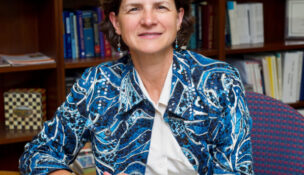
Tara Sweet, SUNY Geneseo assistant professor, explains lab equipment to Kodak’s Jim Continenza and SUNY Chancellor John B. King Jr. (SUNY Geneseo photo)
Tara Sweet, SUNY Geneseo assistant professor, explains lab equipment to Kodak’s Jim Continenza and SUNY Chancellor John B. King Jr. (SUNY Geneseo photo)
SUNY Geneseo, Kodak collaboration bridges academic research, pharmaceutical innovation


 Listen to this article
Key takeaways:
- SUNY Geneseo and Eastman Kodak‘s pharmaceuticals unit collaborated to establish the Kodak Advanced Electrophysiology Lab (AEPL).
- The lab supports development of highly skilled graduates for the growing biotech and pharmaceutical sectors.
- Experiments will incorporate Kodak materials and support testing of emerging pharmaceutical products.
- The collaborative hub is designed to attract external researchers and foster partnerships across academia and industry.
SUNY Geneseo recently marked the opening of the Kodak Advanced Electrophysiology Lab (AEPL), a new facility made possible through a partnership with Eastman Kodak and its pharmaceuticals unit.
The lab, unveiled during a ribbon-cutting ceremony in late April in the Integrated Science Center, was funded by a $625,000 gift to The Geneseo Foundation, Inc. and is designed to support both academic research and industry collaboration in biotechnology and drug development.

College President Melinda Treadwell described the lab as a tangible example of how partnerships between higher education and industry can drive innovation while preparing students for careers in high-demand fields.
The facility will expand hands-on learning opportunities and strengthen the pipeline of talent entering the region’s growing biotech sector.
The event drew a range of state and institutional leaders, including Kodak Executive Chairman and CEO Jim Continenza and SUNY Chancellor John B. King Jr.
Continenza noted that the lab will play a role in supporting Kodak’s expanding pharmaceutical business by enabling product testing in biological and clinical contexts, while also helping the company connect with emerging scientific talent.
“The opening of the Kodak Advanced Electrophysiology Lab is the beginning of a valuable partnership for Kodak and SUNY Geneseo,” Continenza said. “The lab will help support our growing pharmaceutical business by evaluating the performance of our products in biological and clinical settings and provide insights about real-world customer requirements. In addition, SUNY Geneseo will be an important source of scientific talent we’ll need to sustain future growth of our pharmaceutical business in the United States.”
The new lab features both automated and manual equipment called “patch clamp systems,” which is the technology used to measure the ionic currents of cells.
According to Tara Sweet, assistant professor of biology–psychology and the lead scientist with oversight for the lab, this technology will allow researchers to study ion channels involved in gastrointestinal function and cancer cell behavior.
Beyond research, the lab is positioned as a teaching and collaboration hub. Students in biology, biochemistry, chemistry and neuroscience programs will gain exposure to specialized tools and techniques typically unavailable at the undergraduate level, including electrophysiology, cell culture and solution preparation.
Dean Agya Boakye-Boaten emphasized that the lab is intended to foster innovation and cross-disciplinary collaboration, both within the college and with external partners. The institution expects the facility to attract outside researchers and support joint projects with academic and industry collaborators.
“It is designed to give our students hands-on, state-of-the-art experience, helping to prepare them to become the next generation of scientific leaders and innovators,” Boakye-Boaten said. “We are eager to see the groundbreaking research this lab will inspire and the collaborative opportunities it will create for our faculty and the wider scientific community.”
The partnership also aligns closely with Kodak’s research and product development efforts. The lab will use Kodak-developed solutions and materials while providing a testing ground for early-stage products, creating a feedback loop between academic research and commercial application.
[email protected] / (585) 653-4021
s