Sign In
Upcoming Event
 Free Newsletter

Royal Oak’s real estate portfolio surpasses $1B in total capitalization
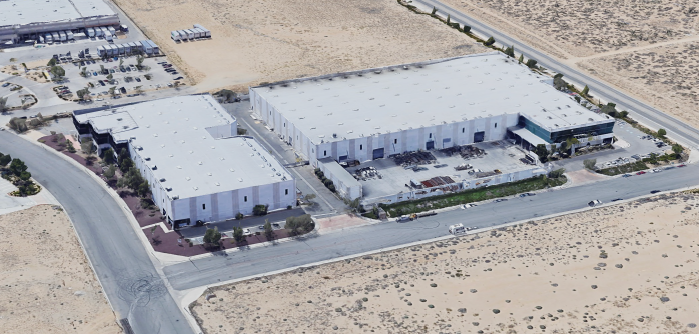
The recent acquisition of two properties in Palmdale, California, that are home to Delta Scientific Corp. pushed the Royal Oak Realty Trust portfolio past $1 billion in total capitalization. (Photo provided by Royal Oak)
The recent acquisition of two properties in Palmdale, California, that are home to Delta Scientific Corp. pushed the Royal Oak Realty Trust portfolio past $1 billion in total capitalization. (Photo provided by Royal Oak)
Royal Oak’s real estate portfolio surpasses $1B in total capitalization


 Listen to this article
Summary:
- Royal Oak owns 79 properties in 23 states
- Portfolio surpasses $1 billion in total capitalization
- Average lease term exceeds 11 years for stability
- Firm targets buildings that house mission-critical industrial operations
What began as a small real estate investment trust with a portfolio of properties almost exclusively in Upstate New York isn’t so small anymore.
Royal Oak Realty Trust, headquartered on East Avenue, has more than 1,200 investors, owns 79 properties across 23 states and last month surpassed $1 billion in total portfolio capitalization.
The $1 billion barrier was achieved in just over 12 years and represents continuing growth for the Rochester-based REIT. But it’s more than milestone; it’s confirmation of Royal Oak’s principles and strategic initiatives.
The firm targets industrial properties in the manufacturing sector, concentrating on buildings that host the mission-critical operations of the tenant. That strategy has led to long-term leases, which enhances portfolio stability.
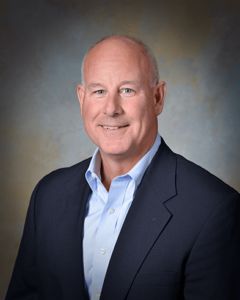
“Because these are mission-critical operations — heavy infrastructure on the tenant side as far as bolt-down equipment, production lines — they don’t mind committing for a long period of time,” said Bruce Bender, Royal Oak’s chief investment officer. “Most of our deals are 20-year lease-backs.
“Our investors can sleep well at night, knowing our remaining lease term is over 11 years on an average across our entire portfolio.”
That also means consistent returns for the approximately 1,200 investors.
“We are a fund that’s created to provide consistent monthly income to our investors from stabilized properties,” said Dan Goldstein, founder and CEO of Royal Oak. “Everything we buy has a tenant that is already in possession and paying rent on the day we own the facility. It’s really a de-risked strategy to create very tax-efficient income for our investors.

“With the appreciation of the stock plus the dividend that’s paid, we’ve averaged over 9 percent return annually, we’ve never missed a payment of our dividend, and our stock price has not gone down in 13 years.”
That has all been achieved because of their operational practices. Bender’s acquisitions team first focuses on the country’s 75 largest metro areas, and then takes a deeper dive into those with the strongest industrial fundamentals, breaking it down further to the MSAs with a solid industrial footprint that is poised for growth.
Around 94 percent of Royal Oak’s revenue is derived from industrial tenants, but there is diversity within those industrial sectors.
For the most part, absolute net leases are the norm, meaning the tenant is responsible for all costs of operating and maintaining their building building as well as site upkeep.
“The tenant is paying for the roof replacement, the HVAC replacement, paying all the taxes, the insurance, they’re mowing the lawn,” Bender said, “so it’s not an actively hands-on management-type portfolio, which allows us to go wherever we want to go across the country.”
That’s why the investor relations team has a presence not only in Rochester but also in the Midwest, Southeast and a West/Southwest regions. Royal Oak is adding between six and 12 new investors every month.
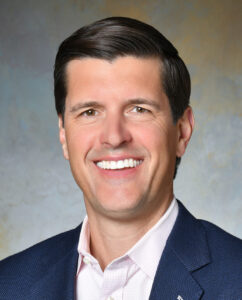
“You can only grow with the support of a growing and diverse investor base,” said Mark Allen, the firm’s president and chief development officer. “We have investors in over 30 states. Most of our recent capital is coming from outside of Rochester.”
Acquiring properties is an extensive process. The firm works with national brokers but also adds to the portfolio through referrals and by buying properties from existing investors.
“We buy buildings that are not easily reproduced today,” Goldstein said. “To build the type of buildings that we own has gotten really expensive due to inflation. Therefore, the rents that have to be charged to support that cost of a new building have grown considerably. So, when we’re able to get buildings that are 10 to 30 years old, and when we’re able to get them at a significant discount of what it would cost to replace them, we’re able to continue to keep rents at a relatively low level.
“And that’s very strategic for us. Tenants don’t want to pay more rent, they don’t want to leave.”
When Royal Oak began assembling a portfolio in 2014, most of the assets were in Upstate New York. “That’s where we’re from and that’s where a lot of the deals were coming to us,” Bender said.
Now, along with Upstate, the firm’s other top markets are Cleveland, Phoenix and Chicago. They’re able to close deals because they are good buyers, they operate with integrity and they honor their commitments, Goldstein said. They’re also thinking big-picture.
“We’re a buy-and-hold landlord; we’re not looking to flip these things, we’re in it for the long term,” Goldstein said.
So how does Royal Oak decide to buy a certain property? Often the owner of a family owned business is looking for an exit strategy and is courted by private equity firms. The owner will sell the real estate first, arrange a long-term lease and then sell the company to private equity, because private equity usually has no interest in being a property owner.
Royal Oak often joins the negotiations as the deal nears completion.
“We can assist by offering a simultaneous close,” Bender said. “We can meet them at the closing table, they buy the operating company, they enter into a long-term lease with us, we buy the real estate from the founder of the company and everyone’s happy.”
Other times, a business owner is looking to monetize their real estate.
“Perhaps they’re buying out a competitor, perhaps they are buying out some partners, but growth capital is typically why they’re selling (their real estate),” Goldstein said.
On occasion, however, a business needs a cash infusion to right the ship. Those are property deals Royal Oak avoids, because if the business fails, they’re stuck with an empty building.
“It’s up to our team to understand why they’re selling,” Goldstein said. “There’s the right reasons and there’s the wrong reasons. A business is struggling and they’re grasping at straws to stay solvent, so they sell their building. We don’t ever do those deals. We’re not coming to rescue a business, we’re there to infuse capital into a business that needs it for the right reasons.
“We have to validate that through a very diligent process. We spend a ton of time on not only interviewing them and reviewing their financials. We go on site, we meet their team, we walk the building with them, we do a lot of third-party verification to make sure the investment thesis is solid.”
But the review process doesn’t end at the closing table. The investment thesis of every property in the portfolio is reviewed on a quarterly basis. That helps ensure profits for stockholders.
The firm surpassed the $1 billion barrier in total capitalization (approximately $560 million of equity and approximately $450 million of debt) in mid-April with the $37 million acquisition of two buildings that sit on around 8.7 acres in Palmdale, California. Delta Scientific Corp., which manufactures vehicle access control equipment, operates in both buildings.
Royal Oak is externally managed by Cambridge Street Asset Management, which is comprised of six partners: Goldstein, Allen, Bender, along with Matt Zappia, the chief operating officer, Charlie Knittle, the chief financial officer, and Stan Holland, chief strategy officer.
Along with Goldstein, Charles Lannon, Thomas Bonadio, E. Philip Saunders, Deborah McLean, Martin Mucci and William Green serve on the board of directors.
[email protected]/(585) 653-4020
l