Sign In
Upcoming Event
 Free Newsletter

Li-Cycle completes funding round for Rochester hub
Li-Cycle completes funding round for Rochester hub


 Listen to this article
Canadian battery recycling company Li-Cycle Corp. has closed a Series C equity funding round to fund the development of its Rochester commercial hub and to drive expansion into international markets.
Financial terms of the funding were not disclosed.
“Li-Cycle is at the forefront of perhaps the most important segment of the electric vehicle and battery supply chain,” CEO Ajay Kochhar said. “This is a market that requires significant development – specifically when it comes to handling the incoming tsunami of spent lithium-ion batteries. Without sustainable and economically viable lithium-ion battery recycling, we believe it’s likely that electric vehicle proliferation will be substantially hindered.”
Kochhar said the company’s newest investment partners have the vision to see that innovative and circular battery recycling is the key to providing a solution for the urgent global challenge and opportunity.
“The need for an environmentally sustainable recycling capability for lithium-ion batteries is critical,” said James McIntyre, senior managing director and COO of Moore Strategic Ventures LLC, which led the financing round. “Not only does Li-Cycle’s technology accomplish this, but it does so while enhancing the local supply of essential battery materials, most notably cobalt, lithium and nickel. Importantly, Li-Cycle’s recycling technology does not use a polluting smelting process.”
This round of funding will enable Li-Cycle to continue to scale the business and strengthen its position as the global leader in lithium-ion battery recycling, McIntyre said.
Li-Cycle was founded in 2016 in Toronto with the vision of solving the global end-of-life lithium-ion battery problem and creating a secondary supply to meet the demand for critical battery materials through innovative recycling technology. Historically, most lithium-ion battery recycling processes have treated the product as waste and a liability.
The company uses an innovative spoke and hub process wherein batteries are shipped to an initial spoke location, where the materials are mechanically processed, then the material is transported to a second hub location where the intermediate product from the spoke is put through a hydrometallurgical, or wet chemistry, process. The resulting components are then returned to their original, battery-grade chemical states for reintegration into the lithium-ion battery supply chain.
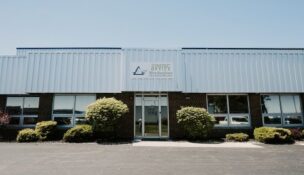
Li-Cycle’s spoke facility in Kingston, Ontario, is operational and the company is commissioning a second spoke facility in Rochester. The local facility is expected to be operational during the fourth quarter of 2020. The company also is developing a hub facility to be located in close proximity to its Rochester plant.
[email protected] / 585-653-4021
Follow Velvet Spicer on Twitter: @Velvet_Spicer