Sign In
Upcoming Event
 Free Newsletter

Cook Properties sees manufactured houses as viable homeownership option
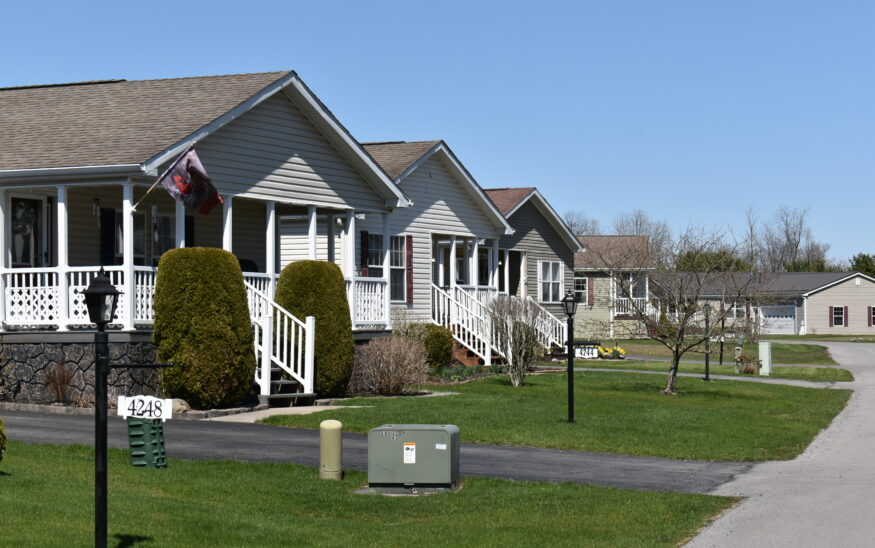
Manufactured homes make up the neighborhood at Canalside Estates in Palmyra. (Photo provided by Cook Properties)
Manufactured homes make up the neighborhood at Canalside Estates in Palmyra. (Photo provided by Cook Properties)
Cook Properties sees manufactured houses as viable homeownership option


Summary:
- Cook Properties closing on nine city-owned lots in Rochester
- Homes priced around $170,000, 2.5 to 3 times less than stick-built
- Pilot program aims to provide affordable housing without subsidies
- Manufactured homes built in 60 to 90 days with modern amenities
Cook Properties will be closing on nine lots in the city of Rochester sometime this month, lots the city owned but wasn’t sure how they could be used.
They weren’t ideal for a traditional new-built home and builders weren’t clamoring to start construction.
So in June of last year, the city put out a Request for Proposals, hoping non-traditional developers specializing in factory-built homes would come forward with ideas on how to best use the parcels.
The proposal by Cook Properties was selected and a pilot program was launched. Over the next three to four months, Cook will bring factory-built houses to the sites, hook up utilities, finish other site work and have the homes ready for occupancy.
The cost to the homebuyer: Around $170,000, or 2 ½ to three times less than the traditional stick-built house.
Which is why Cook Properties believes manufactured homes can be part of the solution to the housing crisis facing so many communities and wanna-be homeowners.

“They’re affordable without subsidies,” said Jeff Cook, managing general partner and CEO of Cook Properties. “We’re hoping to really transform communities. We can change a neighborhood or change a block.”
In Rochester’s Upper Falls neighborhood, First Genesis Baptist Church — through First Genesis Development Corp. — is building 22 homes that will be affordable to residents earning 50-60 percent of the Area Median Income. The cost of the project is an estimated $13 million, or around $590,000 per house, which is why significant state and federal dollars were necessary to meet program goals.
The church ministry and political leaders says those homes will positively impact families and a neighborhood.
The city wants to see if manufactured houses can do the same, and Cook Properties wants to prove it’s possible — without subsidies.
“To build a stick-built house would be in the vicinity of $400,000,” said Erik Frisch, the city’s commissioner of Neighborhood and Business Development. “So, to sell it at a price that is affordable at 60 percent AMI, you would need considerable subsidies.”
Cook Properties intends to deliver two- and three-bedroom houses that can be sold for $170,000, which includes a $10,000 profit.
“Traditional developers usually are at a 20-percent profit,” Cook said.
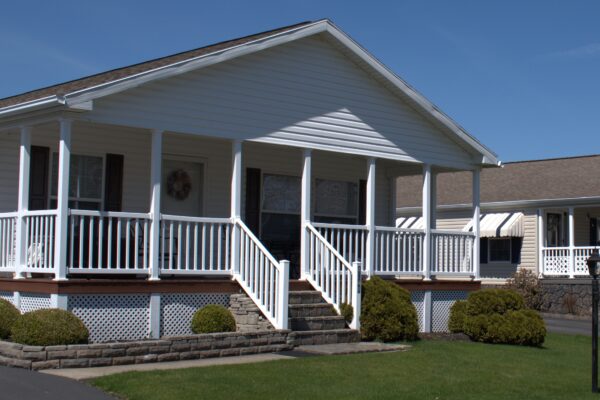
Providing affordable homes without assistance is what makes the program very attractive, especially since the cost to homeowners remains low compared to traditional houses.
“People are looking for alternatives that bring the cost of housing down,” Frisch said. “It definitely feels like now is the moment for this industry.”
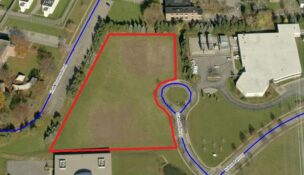
The city will be selling Cook Properties seven vacant lots, two of which were subdivided, so there are a total of nine lots in clusters of three: On Wilder Street on the west side, on High Street on the north side and at the intersection of Lewis and Davis streets in the Marketview Heights neighborhood.
“Based on what has happened elsewhere, we think they will be very well received,” Frisch said. “They (Cook) want to, and we want to, see the product sort of naturally and then we and they can know what it will look like if we want to build at scale.”
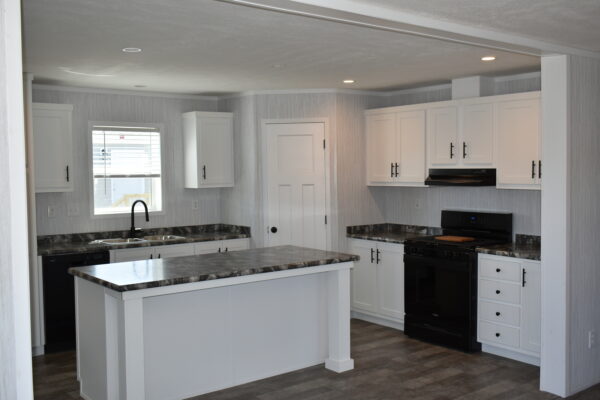
The typical manufactured home sold by Cook Properties has around 1,500 to 1,600 square feet. Three-bedroom, three-bath houses are common. The largest home is around 2,200 square feet, Cook said.
Amenities can include granite countertops, ceramic tile, porches and 7/12 pitch roofs. Basements are an option as well. And the houses don’t necessarily need to be for first-time homebuyers. A house “with all the bells and whistles” goes for around $450,000, Cook said.
A recent change in the law also makes two-story manufactured houses possible. The homes are built off a chassis, which provides the support system for the house. But the chassis can be removed and the house can be sited on a traditional foundation, allowing for a second story.
Price isn’t the only attractive feature for the homes. So is speed to market. The entire process from manufacturing to move-in-ready is between 60 and 90 days, Cook said.
“The site work takes us 30 days at most, but while we’re doing the site work, the home is being manufactured,” he said.
The vast majority of homes are built by one of three manufacturers, Cavco, Clayton and Champion.
Cook believes the pilot program will help eliminate the stigma that’s still attached to manufactured housing. Many people hear the term and think 1970s trailer park.
“These homes are built in a factory but everything we use in our daily lives is built in a factory,” he said. “They’re built with wood, metal and vinyl and can withstand going down the road at 60 mph. And once these homes are sited and put on a foundation, they don’t move.”
Once the homes are occupied, the results of the pilot program will be evaluated. But future programs don’t need to feature only manufactured homes.
“We’re open to having communications with anyone that has a product that they want to deliver,” Frisch said.
[email protected]/(585) 653-4020
e