Sign In
Upcoming Event
 Free Newsletter

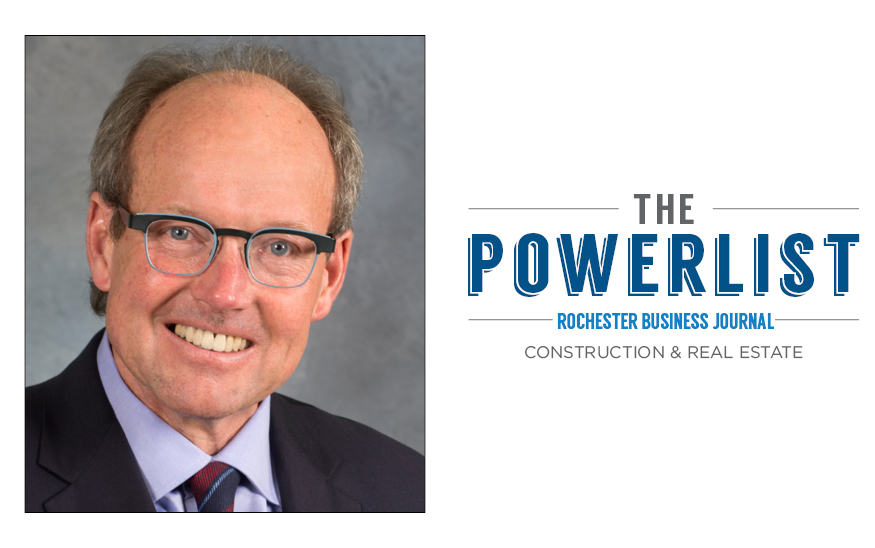
Peter Landers
Peter Landers


 Listen to this article
CEO, Landers Management
Years in current role: 30-plus
Where do you see the most untapped potential for development in the Rochester region?
There is a critical shortage of housing in the Rochester region which is foundational to economic growth. More flexible zoning codes will allow higher density, less parking, and innovative housing such as modular and accessory dwelling units (ADUs). The development permitting and SEQR review processes need to be streamlined to lower costs and shorten time to market. There are opportunities to further incentivize office to residential conversions to increase affordable, workforce and market rate housing. The adaptive reuse of historic underutilized downtown office to create housing and street-level retail will make neighborhoods more vibrant. Economic incentives are required for project feasibility and to address project equity gaps for mixed-use office to residential conversions.
What’s one challenge in today’s market that keeps you up at night?
It’s uncertainty, especially around financing in a high-interest rate environment. Developers focus on managing risk. What keeps me up at night is when there are shifts in multiple factors (interest rates, costs, capital availability, market demand) during the course of a project. The current cost of financing, more conservative lender underwriting, and increasing construction costs make developments increasingly difficult to pencil. Many projects are unable to move forward due to the higher equity required. Delays from permitting, labor shortages and supply chains are also a challenge.
How do you approach decision-making when facing uncertainty on a project?
Uncertainty is baked into real estate development. Market conditions, entitlement risk, construction costs, financing and regulations can change in the 3-4 years from project concept to completion. Due diligence prior to acquisition and a seasoned team is critical. I implement risk mitigation strategies by identifying key project stages, what is critical path, milestones, and key decision points. At each stage, I preserve the option to pause, pivot or exit if necessary. Decisions are grounded in modeling a range of outcomes, scenarios and the probability of achieving them based on assumptions around key variables. Downside risk is evaluated. Flexible designs and utilizing less restrictive capital provide the ability to make changes during a project.
Are there innovations you’ve adopted that have significantly improved efficiency or outcomes?
Clearly AI and “Proptech” are transforming how real estate developments are conceived, built, and operated. I am using AI for predictive analytics to assess market demand that improves feasibility studies and investment decisions. I am finding AI to be useful for testing project assumptions. Building operations are benefiting from smart AI technology for energy management and predictive maintenance. “Proptech” AI innovations are enhancing the resident experience and are offering faster delivery, lower costs, better decision making. The most impactful advances span the entire lifecycle — from site selection, design, construction, leasing and operations.
If you could collaborate on any project in the region, what would it be?
There are many exciting projects underway in the city that are revitalizing neighborhoods as a result of strategic targeted investments, visionary leadership and the collaboration between Roc 2025, ESD, city, and private developers. The West Main Corridor, Inner Loop north and High Falls State Park are examples. It would be great if, for projects including High Falls State Park and Roc the Riverway, the city and state looked for ways to create more synergy between their projects and areas adjacent for private development. This would make projects even more impactful. Our local colleges and universities have the ability to impact the public realm and quality of our city by partnering with private developers on mixed-use downtown projects to create housing for staff.
 |
This profile is part of Rochester Business Journal’s Power List for Construction & Real Estate for 2026. Information used in this profile was sourced from the honoree. |