Sign In
Upcoming Event
 Free Newsletter

The demise of the “professional” personality | Leading With Levity
The demise of the “professional” personality | Leading With Levity


 Listen to this article
 For years, we were taught that being “professional” meant hiding who we really are.
Keep your opinions to yourself.
Do not show too much personality.
Do not be too emotional.
Do not be too funny.
Do not be too human.
Somewhere along the line, business became a giant costume party where everyone showed up dressed as a vice president.
We created workplaces full of polished LinkedIn profiles, corporate buzzwords, and people terrified to say what they actually think. Meetings became performances. Emails became robotic. Conversations became scripted. Everyone learned how to sound important while saying absolutely nothing.
“Let’s circle back and unpack the synergies.”
Translation: nobody knows what is going on.
The strange thing is that for a long time, this worked. Or at least we thought it did. Companies rewarded people who looked composed, controlled, and serious at all times. Leaders believed authority came from distance. If you wanted to be respected, you had to appear untouchable.
Then something changed. People got tired.
Employees started craving authenticity more than authority. Customers stopped connecting with polished corporate brands and started connecting with real people. Younger generations entered the workforce with a built in radar for anything fake. Social media accelerated everything. Suddenly the companies and leaders who stood out were not the most polished. They were the most relatable.
The old version of professionalism is dying. And honestly, it is about time.
I have spent much of my career in entrepreneurship, public speaking, media, and comedy. One thing I have learned is that audiences can sense when somebody is pretending. The room feels it immediately. It creates distance. But when someone shows up as themselves, flaws and all, people lean in.
The same thing is happening in leadership.
The best leaders today are not the ones pretending to have all the answers. They are the ones willing to admit uncertainty, laugh at themselves, and create environments where people feel safe enough to contribute honestly.
That does not mean lowering standards. It means lowering the mask.
There is a huge difference.
One of the biggest myths in business is that seriousness equals competence. It does not. Some of the smartest and most effective leaders I know are also the most playful, approachable, and emotionally aware people in the room.
Meanwhile, many workplaces are still operating like it is 1997.
Employees sit through meetings where everyone speaks in corporate code. Leaders deliver presentations loaded with jargon and generic motivational phrases. Entire teams spend their days trying to “look professional” instead of actually connecting with each other.
Then companies wonder why engagement is low.
Human beings are not machines. We are emotional creatures. We remember how people make us feel. We want energy, connection, meaning, humor, and honesty. A workplace without personality eventually becomes emotionally exhausting.
I think this is especially important here in Rochester.
One of Rochester’s greatest strengths is that people genuinely want to help each other succeed. This community has always had a collaborative spirit. We are not trying to be Silicon Valley. We are something different. We are builders, creators, educators, innovators, and community minded entrepreneurs who actually know each other.
That culture works best when people show up authentically.
Some of the most successful business owners I have met in Rochester are not trying to play a character. They are simply themselves. They care about people. They tell stories. They laugh. They admit mistakes. They build relationships instead of personal brands.
Ironically, that is what makes their brands stronger.
I also think the pandemic accelerated this shift. During that time, the polished image cracked. People were taking Zoom calls from kitchens with barking dogs and children running through the background. For a brief moment, everybody became human again.
And guess what happened? People survived.
In many cases, relationships actually improved. Leaders became more relatable. Teams communicated more honestly. Customers connected more deeply with businesses that showed vulnerability and personality.
Now we are in this strange transition period where many organizations are trying to decide which version of professionalism they want to bring into the future.
The old model was built around control. The new model is built around connection.
That does not mean every CEO needs to become a standup comedian or start dancing on TikTok. Authenticity is not about being loud or performative. It is about alignment. It is about speaking like a real person instead of a corporate instruction manual.
It is about creating workplaces where people do not feel like they have to leave their personality in the parking lot every morning.
I believe levity plays a major role in this.
Levity is not about being unserious. It is about creating emotional oxygen. Humor lowers defenses. Playfulness increases creativity. Authentic conversations build trust. When people feel psychologically safe, they contribute more ideas, collaborate more openly, and stay engaged longer.
The future of leadership will belong to people who can connect, not just manage.
People are hungry for leaders who feel real. Not perfect. Real.
And perhaps the most professional thing we can do moving forward is finally stop pretending all the time.
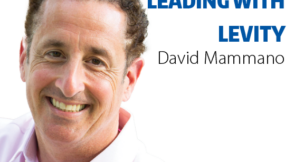
David Mammano is an entrepreneur and workplace optimist who teaches leaders how to lighten up without losing their edge. He is known for blending compassion with just the right amount of crazy. Find him at www.DavidMammano.com
e