Sign In
Upcoming Event
 Free Newsletter

Nurse leaders shape strategy and innovation at Rochester Regional Health

Nurse leaders shape strategy and innovation at Rochester Regional Health


 Listen to this article
Summary:
- Nurses gain executive roles through mentorship and leadership programs
- University of Rochester prepares nurses for executive leadership
- Nurse leaders drive patient-centered care and nurse-led innovation
Across health systems nationwide, nurse leaders are taking on a more prominent voice at the executive level. Their frontline perspective helps to guide decisions around care delivery, workforce challenges, and organizational priorities. Here’s how that is playing out locally.

“Nurses bring a perspective that is both clinical and operational,” he said. “They understand how care is delivered, but also what it takes to support the people delivering that care,” said Daniel P. Ireland, DHA, MBA, BSN, RN, NEA-BC, FACHE, who serves as EVP, chief nursing executive and patient care officer at Rochester Regional Health (RRH).
Ireland has seen that perspective evolve over the course of his 36-year career at RRH, where he advanced from an emergency room nurse to an executive-level leader. That progression, he said, continues to shape how he approaches decision-making today, grounding system-level strategy in the realities of patient care.
“Over the past few years, the voice of nursing at the executive level has really grown,” Ireland said. “It’s not just about operations anymore, it’s about shaping strategy.”
In recent years, he said, nurses have become more central to executive conversations, particularly as health systems navigate workforce challenges, shifting patient needs and increasing complexity across care settings.
Ireland has seen how nurse leaders bring a distinct vantage point to those discussions, one that connects clinical care with day-to-day operations. That lens is especially valuable when decisions around staffing, patient flow and care delivery models are closely intertwined.
“Having that voice at the table helps ensure decisions are informed by what’s actually happening at the bedside,” Ireland said.
At RRH, that shift has been supported by a broader effort to develop nurses for leadership roles. Ireland pointed to mentorship, leadership development programs and opportunities to participate in system-level initiatives as key to preparing nurses to step into executive positions.
“We’re intentional about creating pathways,” he said. “It’s about helping nurses understand how decisions are made and how they can contribute at that level.”
That investment, he added, has ripple effects across the organization. When nurses move into leadership roles, it can strengthen communication, improve alignment and support both staff experience and patient outcomes.
“There’s a level of trust that comes when leaders have been in those roles,” Ireland said. “It helps connect strategy to practice.”
Looking ahead, Ireland expects the role of nurse leaders to continue growing as health systems place greater emphasis on coordinated, patient-centered care, as well as technology and innovation.
“I feel nursing will continue to grow with that integrated model,” Ireland said. “And one of the things I’m very passionate about and I know our organization is very passionate about, is how do we do things around nurse-led innovation? How do we lend our expertise and experience in shaping that next chapter?”
At the academic level, that shift is shaping how future nurse leaders are being prepared for the field. Joy Lent, EdD, BS, RN, CNEcl, who serves as interim director of graduate leadership programs and assistant professor of clinical nursing at the University of Rochester School of Nursing, said there is a growing emphasis on ensuring nurses are equipped to contribute at the executive level.
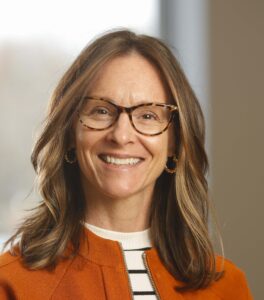
“It is imperative that our leadership students utilize their bedside nursing knowledge and skills to inform decisions being made about the profession of nursing,” Lent said.
That focus extends beyond the classroom, with an emphasis on helping nurses engage in decision-making at multiple levels. Lent said involvement in local, regional and broader organizations is an important part of ensuring nursing perspectives are represented.
“First, and foremost, nurses have walked the walk,” she said. “Nurses are natural systems-thinkers and use a pragmatic lens to see what will influence patient outcomes, patient safety, and the resources to overcome obstacles.”
At the University of Rochester School of Nursing, that perspective is reinforced through leadership development programs designed to prepare nurses for expanded roles. Students are exposed to health system leaders and complete experiential learning hours that contribute to their professional development.
“Our students are exposed to guest lectures from administrators and leaders from our practice partners throughout the URochester Medicine health system, including our surrounding affiliates in the greater Rochester region,” Lent said.
That preparation, she noted, is critical as nurse leadership at the executive level continues to influence not only strategy, but also patient care and workplace culture.
“Nursing representation equals advocacy,” Lent said. “Our patients have comprehensive and unique challenges that nurses need to recognize and evaluate for proper care. Additionally, nurses at the executive level have functioned as frontline staff nurses and can empathize with staff to make changes that will positively affect unit culture and overall satisfaction of the workplace.”
Looking ahead, she pointed to the growing role of technology and the need for balance between efficiency and collaboration. With a rapidly changing technology world, she envisions the role of nurse leaders learning more efficient ways to achieve the outcomes needed.
“In summary, nurses have always been silent leaders,” Lent said. “I believe nurses have been the most trusted profession for many years in a row. We, as nurses, are finally getting the recognition we deserve. I look forward to seeing where nurse executives will lead our profession in the next ten years.”
Caurie Putnam is a Rochester-area freelance writer.
-