Sign In
Upcoming Event
 Free Newsletter

Rochester’s leadership development programs shape tomorrow’s health care leaders

(Depositphotos)
(Depositphotos)
Rochester’s leadership development programs shape tomorrow’s health care leaders


Key takeaways:
- Rochester’s hospitals and universities are cultivating future health care leaders through advanced training and mentorship.
- Rochester Regional Health‘s administrative fellowship provides hands-on executive experience and systemwide project work.
- SUNY Brockport‘s online MHA program emphasizes ethical, evidence-based, and practical health care leadership.
- UR School of Nursing and RIT offer interdisciplinary programs blending clinical, business, and digital health leadership skills.
In a region where education and medicine anchor the economy, Rochester’s institutions are stepping up to grow tomorrow’s critically important heath care leaders. One way they’re doing so is through leadership development programs that give health care professionals the tools to manage teams, shape policy and strengthen patient care.
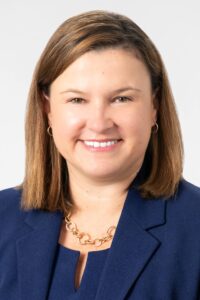
“Leadership development is essential in health care today because the landscape is constantly changing due to new regulations, technology, public health crises and shifting patient expectations,” said Tammy Snyder, president of Rochester General Hospital, part of Rochester Regional Health (RRH). “We need leaders who can adapt, think systemwide and guide teams through complexity.”
Snyder explains that strong leadership drives better outcomes in quality, safety and patient experience and that leadership development programs help align people, processes and resources to improve care delivery.
“Health care also faces growing financial and operational pressures,” she said. “We need leaders who understand both the clinical and business sides and who can lead transformative projects that make a real impact.”
Snyder leads the administrative fellowship program at RRH, which is a 12-month, paid post-graduate program designed to develop the next generation of health care leaders.
“What makes our program unique is that while many hospitals focus on clinical training, few invest in preparing future administrative leaders,” Snyder said. “We’re building a leadership pipeline by giving emerging professionals the experience and confidence to step into higher-level roles.”
Fellows work on system-wide projects under executive mentorship, gaining hands-on experience in operations, strategy, quality and more. Past projects completed by fellows include the design, development and implementation of doll therapy in long term care; project support for building the Sands-Constellation Center for Critical Care; and lean project management for the successful reduction of lab cancellations.
“We’re proud to say that 100% of our administrative fellows have gone on to successful placements after completing the program,” Snyder said. “That’s a testament to the depth and rigor of the experience we offer.”
Dr. Afeez A. Hazzan, Ph.D., associate professor and interim chair in the department of health care studies at the State University of New York at Brockport’s College of Education & Health, says leadership development programs play a critical role in preparing professionals to adapt to change, think strategically and lead with empathy.
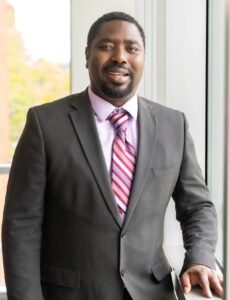
“The health care landscape is evolving at an unprecedented pace, driven by advancements in technology, increasing regulatory complexity, workforce challenges and a growing demand for equitable, value-based care,” Hazzan said. “In this dynamic environment, effective leadership has become more essential than ever.”
One program SUNY Brockport offers in this domain is a fully online Master of Healthcare Administration (MHA) program designed specifically for professionals who want to transition into or advance within leadership, management and policy roles in the health care industry.
“What distinguishes SUNY Brockport’s MHA program is its strong emphasis on practical, ethical and evidence-based leadership development,” Hazzan said. “The curriculum integrates real-world case studies, applied projects and system-level problem solving to help students connect theory to practice.”
Courses are taught by experienced faculty who bring extensive professional backgrounds in health care administration, policy and leadership. This practitioner-oriented approach, Hazzan explains, ensures students gain insights that are immediately relevant to the challenges faced by modern health care organizations.
“The MHA program provides a solid foundation in organizational leadership, financial management, health care policy, ethics, health care informatics and systems thinking,” he said. “Graduates leave equipped to manage complex health care systems, lead interdisciplinary teams and make informed decisions that improve organizational effectiveness and patient outcomes.”
The program also emphasizes the development of key leadership competencies such as communication, negotiation, relationship management and ethical decision-making.
“Students learn how to cultivate healthy organizational environments, lead with integrity and drive sustainable improvements in patient care and operations,” Hazzan said. “The 100% online delivery makes the program accessible to professionals anywhere, providing a high-quality SUNY education without the need to pause one’s career.”
Hazzan emphasizes that health care leadership extends far beyond management titles and, at its core, should be about vision, accountability and commitment to continuous improvement, something SUNY Brockport’s MHA program embodies.
“By developing leaders who can inspire innovation, foster collaboration and uphold the principles of patient-centered care, programs like SUNY Brockport’s MHA are shaping the future of health care, one leader at a time,” he said.
At the University of Rochester‘s School of Nursing, the Leadership in Health Care Systems program was formed in 2004 and has graduated over 300 students from a wide range of different educational and professional backgrounds.

“One of the very unique pieces to the Leadership and Healthcare Systems program is that it is a master’s program at the School of Nursing, but it is an interdisciplinary program,” said Linda Migliore, MS, RN, NPD-BC, CNL, assistant professor of clinical nursing at the University of Rochester’s School of Nursing.
Migliore says the school’s Leadership in Health Care Systems program is unique among higher education institutions due to its interdisciplinary focus. It draws students from many different parts of health care, including nursing, finance, management, human resources, supply chain, higher education admissions, research and more.
“It’s a very, very diverse group of students that are coming to seek further education and leadership development,” said Migliore, who notes that the program’s interdisciplinary nature is important because it allows students to be part of a team and not practice in siloes.
The program is flexible and includes hybrid coursework, a hands-on capstone project and 224 hours of mentored field placement with health care leaders where students gain real-world management experience and forge invaluable professional relationships.
“Because our students are all paired with health care executives they’re learning not only academic, curriculum-based content, but they have over 200 hours spent with some kind of a health care executive in real life,” she said. “So, they’re able to marry together what they’re learning in class and what they’re seeing in their experiential clinical settings, as well as develop mentors and network.”
Migliore says one of the purposes of the program is to help students learn how to lead change in a very dynamic workforce and that faculty play a key role in this.
“We have a number of faculty members that are school of nursing employees, and we also have a number of faculty members that come from clinical practice,” Migliore said. “That diversity is a very valuable aspect of our program. We have faculty that understand what leaders need to know and to be able to effectively manage to meet the needs of the workforce.”
The University of Rochester’s program also has a fair amount of curriculum centered around wellness and inclusion so that students are equipped with the skills they need not only to take care of themselves, but the teams they lead.
“At the end of the day this is all about making the patient experience better,” Migliore said. “We know that if we can arm our leaders with as many tools as possible to be the most effective leaders that they can be, then our patient outcomes are going to be better.”
Migliore began practicing nursing in 1979 as a registered nurse at the University of Rochester and saw the value of leadership development early in her career, taking on her first leadership role two years later. Among the many leadership roles she held at the university: assistant nurse manager, nurse manager, senior nurse manager and retention officer for nursing practice
Migliore retired from her full-time role as specialty program director for the Leadership in Health Care Systems and Clinical Nurse Leader masters’ programs in June 2025, but has continued in several student-facing roles, including teaching a foundational leadership class. In May she received the University of Rochester’s School of Nursing’s Dean’s Award for Excellence in Teaching.
“I’ve seen a lot of evolution in health care over forty-five years,” Migliore said. “It’s a privilege of mine to be able to continue to interact with students who are absolutely amazing people and to maybe have a teeny, tiny impact the leader that they become.”
Dr. Patricia Poteat, Ph.D., interim program director of health systems management at the Rochester Institute of Technology‘s (RIT) College of Health Sciences and Technology says that health care leadership demands a fusion of strong leadership practices, financial savvy, operational efficiency and digital fluency.

“The health care workforce of tomorrow needs to be equipped with competencies across organizational leadership, including fundamental financial management, operational streamlining, program evaluation and development and health IT,” said Poteat. “Employees need to be prepared to transform health care organizations through strategic vision, evidence-based practice and innovation.”
In addition to a focus on the business of health care, Poteat says a strong emphasis on the human side of the services and products delivered is required, as well as the care needed to connect strategy and service delivery to community needs.
“Equally as important is cultural and emotionally intelligent leadership,” she said. “These durable skills and competencies are needed to propel health care organizations into the next level of health care delivery.”
To this end, RIT’s College of Health Sciences and Technology has offered a Health Systems Administration certificate program for over twenty-five years.
“The program was developed to support the growing need–locally regionally and nationally–for effective health care leadership,” Poteat said. “Since its inception, the program has been evolving along with the ever-changing health care landscape.”
An advisory board of industry professionals help inform and guide the certificate program, which reflects the college’s broader commitment to developing human-centered, tech-driven leaders to ensure it remains relevant, valuable and applied in nature.
“The program employs flexible admissions and online asynchronous learning that allows our students to maintain a work-life balance,” Poteat said. “Our courses, which are taught by practitioner-based faculty, involve hands-on, human-centered learning that engages with advanced systems and tools that mirror modern health care environments.”
Students gain real-world leadership experience through applied projects that emphasize both data-informed decision-making and compassionate patient care. The program also provides potential to collaborate with other RIT programs and the opportunity to work alongside peers in engineering, design and computing to develop forward-thinking solutions.
“Uniquely, RIT’s partnership with Rochester Regional Health offers meaningful opportunities to understand health care delivery and leadership within a major regional health system,” she said.
Poteat explains that health care is always evolving and that today’s workforce needs to be prepared for tomorrow’s challenges.
“Our employer base noted to us their desire to have workers who are critical thinkers, able to analyze data to make operational decisions and manage diverse teams using effective communication skills,” she said. “Employees need the skills and competencies of highly effective health care leaders who are adept at driving organizational excellence, improving the health of their communities and serving others.”
Caurie Putnam is a Rochester-area freelance writer.
=