Sign In
Upcoming Event
 Free Newsletter

Therapist Shawn Ennuson builds personalized mental health practice in Rochester
Therapist Shawn Ennuson builds personalized mental health practice in Rochester


Summary:
- Shawn Ennuson launched private practice in 2020
- Practice focuses on adults, couples, and families
- Ennuson integrates advocacy from disability services background
- Therapist emphasizes parent-child model for child clients
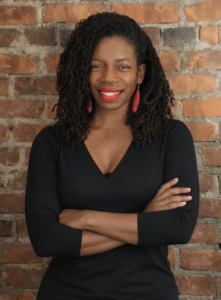
Ask Shawn Ennuson where her business began and she doesn’t start with the day she opened her private practice. She starts with her first job at Heritage Christian Services more than two decades ago, where supporting people with intellectual and developmental disabilities shaped the therapist, and business owner, she would become.
“What those beautiful people taught me is no matter how severe the limitation seems to be, a person can still learn and grow,” Ennuson says.
That lesson became the foundation for Ennuson’s career. After more than 20 years in human services, earning degrees from Empire State College and Roberts Wesleyan University, and becoming a licensed clinical social worker, she launched Shawn Ennuson LCSW P.C. in 2020. The move into private practice gave her something she couldn’t always find working in nonprofit organizations: the freedom to care for clients on her own terms.
From human services to private practice
“I saw my limitations in not-for-profit organizations,” Ennuson says. “That’s what led me into private practice.”
Today, Ennuson works primarily with adults, couples and families, creating treatment approaches she says are tailored to the individual rather than confined by rigid organizational structures.
“In my private practice it allows me to be able to provide folks with really good quality services in ways that are meaningful to them,” she says. “I also think in ways where they would not receive services or quality services in some of our local clinics or overburdened hospital settings.”
Her work extends beyond traditional counseling sessions. Ennuson believes stronger emotional health creates stronger families, and stronger families build healthier communities.
“I believe that healthy people, healthy individuals strengthen and help healthy families,” she says. “Healthy families strengthen communities.”
Helping clients recover from trauma, improve communication and build resilience is central to her practice. Advocacy also remains a defining part of her work, a carryover from the years she spent supporting people with disabilities.
Learning to wear the CEO hat
Owning the practice, however, has required a different set of skills.
“I wasn’t taught how to be a business owner,” Ennuson says with a smile.
Running a psychotherapy practice means managing far more than client appointments. Insurance claims, billing, compliance, marketing and business development all landed on her desk.
“So having to wear several hats – a therapist, CEO, educator, market, insurance and billing, compliance, business development – all those things I’ve literally learned hands-on on my own because that is not something that was taught in school,” she explains.
Experience has made those responsibilities easier, she says, and she’s learned to outsource areas outside her expertise so she can devote more time to clients.
Helping clients find their own strengths
The clinical work remains the most rewarding part of owning the business.
Ennuson says her greatest professional moments often come when a client begins to see themselves differently.
“When a client has their own ‘aha’ or light bulb moment, it’s like, ‘Yes, you got it,’” she says with obvious joy. “They’ve always had it; they just needed someone else to come in and kind of steer them just a little bit, guide them just a little. Tweak the lens that they’re looking through.”
Her practice primarily serves adults 25 and older, though she occasionally works with younger family members connected to existing clients. When children are involved, she has shifted to a parent-child model because she believes lasting progress depends on caregivers being part of the process.
“Children do very well in therapy,” Ennuson says. “But when they go back home to their parents who are not connected in any way to any emotional or social supports, everything unravels for the child. So, the parent has to be my client, my primary client, in order for me to work with children.”
That philosophy reflects a broader belief that has guided Ennuson throughout her career.
“People are not broken. They don’t need to be fixed,” she says.
Instead, she sees therapy as helping people recognize the strengths they already possess while replacing survival habits that no longer serve them.
“Healing is not about becoming someone new,” Ennuson says emphatically. “It’s about realigning with who you’ve always had the potential to become.”
n