Sign In
Upcoming Event
 Free Newsletter

Downtown Rochester surpasses 10,000 residents as housing demand grows

The view from a residential unit inside Tower280. (RBJ File photo)
The view from a residential unit inside Tower280. (RBJ File photo)
Downtown Rochester surpasses 10,000 residents as housing demand grows


 Listen to this article
Summary:
- Downtown Rochester exceeds 10,000 residents milestone
- Buckingham Properties highlights new amenities like Rimal Coffee House
- Gallina Development notes diverse resident demographics and strong occupancy
- Riedman emphasizes importance of walkability and safety
More than 10,000 people now live in downtown Rochester, with hundreds of additional housing units planned or under construction. As more people seek walkable lifestyles with easy access to dining, entertainment and community amenities, local developers and real estate leaders discuss what’s driving interest in downtown living and what comes next for Rochester’s city center.
“Downtown living continues to appeal to people seeking a walkable, connected lifestyle with easy access to dining, entertainment and cultural experiences,” says Tom Latta, vice president of leasing and partner at Buckingham Properties. “As more businesses and destinations invest downtown, interest in urban living has remained strong.”
Latta says he and his team view every new commercial tenant as a potential amenity for the residents who call their buildings home.
“At Tower280 and 260 East Broad Street, both connected by The Grove, each new tenant has contributed to a stronger residential experience,” he said. “From dining destinations like Branca Midtown and Patron Saint to gathering spaces like Unwine’d and Dice Versa, each business adds another layer of vibrancy and convenience.”
Soon, he notes, Rimal Coffee House will provide residents and office users with another everyday amenity right outside their door.
“Every space we activate is an opportunity to further strengthen the downtown living experience,” said Latta, adding that convenience remains a priority for many residents choosing to live downtown. “Residents want amenities that enhance their daily lives, whether that’s great restaurants, coffee shops, entertainment, fitness options or gathering spaces just steps from their front door.”
Latta says Buckingham Properties is always looking toward emerging neighborhoods with potential for future residential growth.
“Right now, we have our eye on the High Falls area and see great potential for the neighborhood, but it has consistently been underutilized,” he said. “With the buzz surrounding the upcoming High Falls State Park and the nearby ESL Ballpark, there is a real opportunity to attract more residential interest.”
At the same time, he says residents’ needs and expectations are constantly evolving, and one of the greatest challenges for property owners is staying ahead of those changes.
“Attracting residents is important, but retaining them requires continuous investment in the living experience,” he said.
Evan Gallina, partner at Gallina Development Corporation, says downtown Rochester’s residential growth has evolved significantly over the past decade, both in the number of people choosing urban living and in the diversity of residents now calling the city center home.
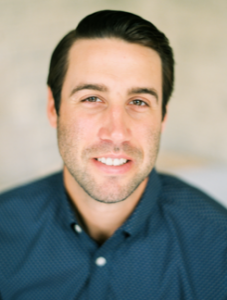
“There’s more diversity in unit type from an end-user standpoint,” Gallina said. “You have young professionals, empty nesters, students, a lot of medical-related folks through U of R, and a lot of families too. We see a lot more strollers around, which is always a fun indication of the demographic.”
He says demand for downtown housing has remained consistently strong, with many recently completed residential developments quickly reaching high occupancy levels. At Gallina properties like Innovation Square and The Metropolitan, he says interest continues to reflect a growing desire for walkable urban living paired with entertainment, dining and cultural amenities.
“We continue to have strong demand,” he said. “Everything that has been built has been absorbed essentially.”
As more residents move downtown, Gallina says expectations around amenities continue to evolve. Walkability remains one of the biggest draws, with residents increasingly seeking neighborhoods where restaurants, entertainment venues, bars and gathering spaces are all within a few blocks of home.
“You don’t move to a downtown urban center to get in your car and go everywhere,” he said.
Gallina points to the growing number of entertainment options downtown as another factor driving residential demand. In addition to restaurants, bars and public gathering spaces, he notes that the theater at Innovation Square hosts an increasing number of events, creating another amenity residents can enjoy within walking distance of home.
Still, Gallina says public safety remains one of the most important factors in attracting and retaining residents.
“We need to make sure that our residents and people who work downtown feel safe walking a block, two blocks, or three blocks away to get lunch or dinner or go see a show,” he said. “There’s not a big enough investment we could make on the side of public safety.”
Access to everyday necessities like groceries also remains a challenge, though Gallina believes Rochester may finally be reaching the population density needed to better support those types of amenities. He points to the milestone of surpassing 10,000 downtown residents as an important benchmark long viewed as critical for sustained residential and commercial growth.
At the same time, Gallina believes downtown still has room to grow, particularly when it comes to homeownership opportunities.
“The majority of our market downtown is for-rent units,” Gallina said. “If people have an opportunity to have equity in their home through a condominium or something along those lines, it allows more growth from that standpoint in our center city.”
“If you look 10 years ago, at 5 p.m., the lights in office buildings went off and people went home to the suburbs,” Gallina said. “That doesn’t happen anymore.”
David J. Riedman, founder, president and CEO of Riedman, believes growing interest in downtown living is being driven in part by broader shifts in housing preferences among two rapidly growing demographic groups: Gen Z and adults over age 55.

“What both of those segments are looking for is not the large colonial on a quarter-acre lot,” Riedman said. “They’re looking for a walkable environment. They’re looking for activities, entertainment and dining in close proximity.”
Riedman says those evolving preferences have helped fuel demand for multifamily housing in downtown Rochester, where residents increasingly value convenience, density and connection to neighborhood amenities.
“All of those attributes make multifamily housing in a village environment, in a city environment, in a higher-density environment appealing to both of those segments,” he said.
As developers evaluate future residential growth opportunities downtown, Riedman says success depends not only on the housing itself, but also on the surrounding neighborhood experience. Walkability, entertainment, public spaces and safety all play important roles in attracting residents.
“We tend to look at amenities in a twofold way,” he said. “What are the amenities we have to provide in the property we’re developing, and what are the amenities the broader neighborhood or community has to offer?”
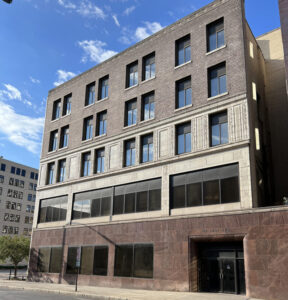
Within the buildings themselves, Riedman says residents continue to prioritize practical amenities like secure parking, fitness facilities, gathering spaces and strong security measures.
“Parking is still very important,” he said. “We’re not Chicago, we’re not New York. People aren’t going to be reliant on mass transit.”
Riedman says continued economic development throughout the Rochester region will also be critical to sustaining downtown residential growth in the years ahead.
“We need to keep pushing on economic development initiatives and growth of our economy,” he said. “That needs to be supported by and will align with continued development of more housing downtown.”
At the same time, he says downtown must continue investing in entertainment, services, public spaces and safety in order to maintain momentum.
“It all works together,” he said.
Riedman Companies recently completed The Neisner at East End, a redevelopment of the historic Neisner Building at 49 East Ave. into a 54-unit apartment community featuring amenities such as a coffee lounge, outdoor patio, pet spa and shared fitness and gathering spaces. According to Riedman, the property reached full occupancy shortly after opening in 2025.
The company is also moving forward with the conversion of Clinton Square at 75 S. Clinton Ave. into a mixed-use property featuring more than 100 residential units on the building’s upper floors while maintaining office space below. Riedman says apartment deliveries are expected to begin in 2027.
Caurie Putnam is a Rochester-area freelance writer.
b