Sign In
Upcoming Event
 Free Newsletter

Rochester health systems embrace digital innovation

A close-up view highlights a professional's hands holding a tablet, which projects a luminous, futuristic network of interconnected lines and nodes, symbolizing advanced technology.. (Photo by Depositphotos)
A close-up view highlights a professional's hands holding a tablet, which projects a luminous, futuristic network of interconnected lines and nodes, symbolizing advanced technology.. (Photo by Depositphotos)
Rochester health systems embrace digital innovation


 Listen to this article
Key takeaways:
- Rochester Regional Health rolls out AI-powered ambient digital scribing to reduce burnout and boost patient engagement.
- Oak Orchard Health integrates EMRs, adds kiosks, and expands digital scribing for streamlined care.
- Trillium Health launches Epic MyChart portal, Boostlingo interpreting tech, and enhanced patient data security.
- URMC researchers use wearables and telemedicine in Parkinson’s and Huntington’s disease studies.
The digital transformation of health care continues to grow at a rapid pace, with new and refined technologies like ambient digital scribing, wearables and interoperable electronic health records, which help redefine patient care and experience. Here are four examples of this trend at health care organizations of diverse sizes in the Rochester region:
Rochester Regional Health: Ambient digital scribing
Dr. Everett Weiss, M.D., a pediatrician and director of health informatics at Rochester Regional Health, points to AI-driven ambient digital scribe technology as an emerging game-changer for the health system’s providers, staff, and patients.
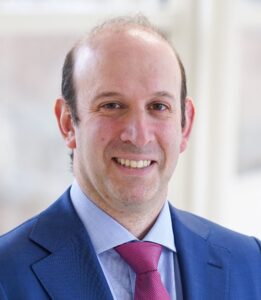
“The way ambient digital scribes work is that providers leverage the technology to capture a patient-provider visit,” Weiss said. “That technology will then create a transcript of that visit and ultimately generate components of the visit note for the provider.”
Rochester Regional Health recently wrapped up a large-scale pilot of ambient scribing with three hundred of its providers in numerous disciplines across the health system. The results were so positive that the organization is now just weeks away from a full rollout.
“We heard so many great success stories through our pilot participants and we are very proud of the fact that we pulled together one of the larger pilots that’s actually been completed using ambient digital scribes,” Weiss said.
At Rochester Regional Health, providers using ambient digital scribing (which is conducted through a smart phone as a recording device that is in the room with the provider) will first ask patients for consent to use the technology. Then, they will conduct the visit with the opportunity for increased attention directly to the patient, Weiss said, as opposed to also having to take notes on a computer or on paper.
“We’ve had many patients who, at the end of these visits or even through feedback afterward, have remarked that this is an incredible technology that has really made a difference in their patient visit,” Weiss said.
The Rochester Regional Health pilot also showed that the quality of the notes that are being generated by the digital scribe (which must still be reviewed and signed off on by providers) is of excellent quality, which is helpful not only to other providers but patients.
“Patient engagement is hugely important to us,” Weiss said. “We want our patients to be reading their notes, and when the notes are of higher quality and more comprehensive, patients are actually gaining more from those visits as well. It’s just an additional byproduct of leveraging this technology that we’re so excited about and that patients are being able to benefit from.”
In addition to his role as director of health informatics, Weiss is also the attending pediatrician at the Special Care Nurse at the health system’s Unity Hospital and has used ambient digital scribing himself with parents of newborns.
“They are very excited to have me use this technology,” Weiss said. “After the introduction of the technology and getting their consent to use it, it has really impacted both of us in the sense that I’m able to put my phone – which is the recording device – to the side and engage in a conversation without any paper. It really helps to just improve the patient experience.”
In his own practice, Weiss has found that the ambient scribing technology is so accurate and advanced that the amount of time he needs to spend reviewing and editing notes is very small.
“Of course, it is very important that I’m looking at and reading those generated notes before I’m signing off, and there are many other components that I’m adding to the note that I think are relevant,” Weiss said. “But at the end of the day, it saves so much time and allows me to spend more quality time with the patient.”
Rochester Regional’s pilot found that some providers were able to decrease their documentation time by 25% and that providers were half as likely to report consistent symptoms of burnout as they were before using this technology.
“I don’t think that we’ve seen a technology deployment with such favorable reviews from our providers,” Weiss said. “If I had to put a word cloud together of what our providers are sharing back, they say that this technology is game-changing and that it is giving them back time to find an appropriate and well-deserved work-life balance.”
Oak Orchard Health: Electronic medical record optimization
Oak Orchard Health, a Brockport-based Federally Qualified Health Center (FQHC) with nine locations and two mobile units, is also in the process of rolling out ambient digital scribing following a very positive pilot.
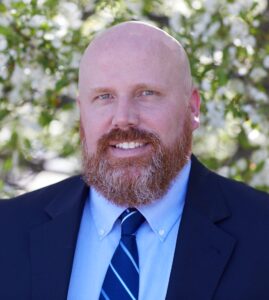
“We have 24 providers out of 35 on the medical side with ambient digital technology enabled and utilizing it in some form, and we’re beta testing it with the behavioral health side of the house,” said Jason Kuder, chief information officer at Oak Orchard Health.
Kuder also calls ambient digital technology a “game changer” for the organization, and it is giving providers more opportunity for face-to-face time and less documentation during the visit.
The organization is also currently focused on electronic medical record optimization and recently integrated multiple EMRs into our one EMR platform.
“This year has been an explosion for us, technology-wise,” he said. “I’d say the next piece for us would be the online booking of appointments so patients can schedule whenever they feel is convenient for them. It helps with no-show rates because patients have the time to think about dates convenient for them instead of being barraged with dates on the phone.”
Oak Orchard also now has self-service medical check-in kiosks available for patients to check in at their appointments when they arrive on site.
“We’re excited about all the new technology, and I think our staff is excited because we’re implementing more things to alleviate staff workload and then also streamline patient care, which I think is a win-win for everybody,” Kuder said.
Trillium Health: MyChart rollout
At Trillium Health, a Rochester-based community health center that provides equitable, judgment-free, and affordable care for all people, Andrea Campbell, associate vice president of information systems and technology, says the organization is excited about many recent enhancements to patient care and experience through technology.
On May 1 of this year, the organization officially switched its online patient portal system to Epic Systems’ MyChart, the same patient portal system used by UR Medicine.
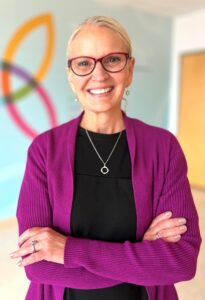
“MyChart gives us the interoperability between the healthcare systems in Rochester, which is big, and which was our goal,” Campbell said. “We now have that more cohesive, holistic patient care model.”
One of the reasons Trillium Health made the change was due to patient feedback from a survey that showed patients wanted the ability to schedule, reschedule, and request prescription refills online – all capabilities offered by MyChart and that will ultimately be available to patients as the conversion process from the legacy system continues.
Trillium Health also recently introduced services from Boostlingo, an innovative interpreting technology company based in Texas that offers AI-driven innovative solutions to communication and language access. The services provided by Boostlingo do not replace Trillium Health’s human interpreters.
“This is an additional technical enhancement that has now been able to be shared across the patient areas and client areas like our food pantry,” Campbell said. “We have a very eclectic, wonderful, patient base from various backgrounds, and this technology bridges any language gaps.”
Campbell says the organization is also continually staying on top of the latest security technology and implementing robust tools to protect patient information and confidentiality.
“For our patients to have the confidence that their data is not going to be breached in any way, shape or form, and that it will be protected is, is very important to us,” Campbell said.
University of Rochester Medical Center: Wearables for neurodegenerative disease research
Technology-enabled research happening in Rochester is also helping improve patient outcomes and experiences both locally and beyond, such as the work being done by Dr. Jamie L. Adams, M.D., a neurologist at the University of Rochester Medical Center (URMC) and her team.
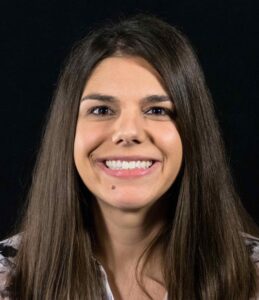
Adams, who received her MD from the University of Rochester School of Medicine and Dentistry in 2011, completed a residency in neurology in 2015 at the University of Pennsylvania. When she returned to the University of Rochester for a movement disorders fellowship from 2015-2016, she began working with Dr. Ray Dorsey, M.D., a pioneer in applying telemedicine to the treatment of movement disorders, especially Parkinson’s disease.
In 2015, the White House recognized Dorsey as a “Champion of Change” for his efforts to enhance care for those with Parkinson’s disease using technology, and he is currently the David M. Levy Professor of Neurology at the University of Rochester.
“Ray had started doing work in telehealth, really in an effort to provide care and involve people in research from all over,” Adams said. “He needed someone to help, and I was just starting and chomping at the bit to get involved. I was put in a position to lead things pretty early, and now I have several of my own grants, and I owe a lot of that independence and that funding to Ray’s mentorship.”
Adams’ own research focuses on the use of technology, such as wearable sensors, smartphone applications, and telemedicine, in individuals with neurodegenerative diseases like Parkinson’s disease and Huntington’s disease.
“Several of the studies that I’m doing, including the two major ones I’m doing – WATCH-PD in Parkinson’s Disease and the FDA grant for Huntington’s Disease study called MEND-HD – are now decentralized trials,” Adams said. “What that means is that we are seeing people from all over the country, and we’re doing the research visits over Zoom.”
For these studies, participants wear devices remotely for a period of time or engage with a smartphone application remotely for a period of time.
“That has expanded our ability to recruit from a broader population and makes our study population more diverse,” Adams said. “And it really does allow people that may not otherwise be able to participate in research because they don’t live close to a large academic center to participate.”
Adams explains that the wearable technology and smartphone applications used by patients in these studies help provide researchers and medical professionals with a better picture of how people are actually feeling and functioning in their daily lives with Huntington’s and Parkinson’s disease.
“This is really important for both trials and clinical outcome assessments, but also in clinical care,” she said. “I think it can allow us to uncover new details about disease – the things that we’re not able to capture in clinic, like falls or the proportion of the day spent seated or sleeping or even walking speed, which is a particular interest of mine. I think we’re starting to use technology in the way that we should be, and that is to improve patients’ lives.”
Caurie Putnam is a Rochester-area freelance writer.
e