Sign In
Upcoming Event
 Free Newsletter

Adaptive reuse very much a part of the LeChase Construction skillset

Rendering of the Rochester Regional Health campus in Geneva. (Photo provided by RGH)
Rendering of the Rochester Regional Health campus in Geneva. (Photo provided by RGH)
Adaptive reuse very much a part of the LeChase Construction skillset


The portfolio of projects completed by LeChase Construction Services, LLC, over the years looks very much like a “what’s what” of the best work in the building industry.
From the Karsh Alumni & Visitors Center at Duke University and the Global Cybersecurity Institute at Rochester Institute of Technology to The Strong National Museum of Play in downtown Rochester and Legoland in Goshen, the company’s skillset and craftsmanship are evident in every detail.
That quality is one reason LeChase was named New York 2024 Contractor of the Year by ENR, the leading trade publication for the industry.
But the firm also is building a reputation for its ability to turn something built decades ago into a modern masterpiece.
The University of Rochester chose LeChase to convert a vacant Sears store at The Marketplace Mall into The Saunders Center for Orthopaedics and Physical Performance.
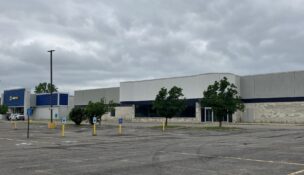
Rochester Regional Health (RRH) called on LeChase to create the Riedman Health Center in Irondequoit from the shell of a former Tops Friendly Markets store.
Just last month, LeChase was honored with ENR’s national Best of the Best award for turning the abandoned E-J Victory factory into Victory Lofts, a 156-unit upscale living community.
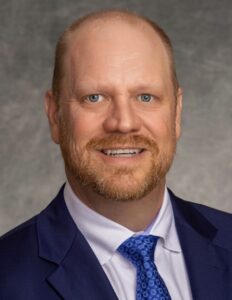
“That was really exciting to hear,” Jim McKenna, senior vice president at LeChase, said of the ENR recognition. “It certainly was a project that came with challenges, but we came up with a lot of unique solutions and got it done.”
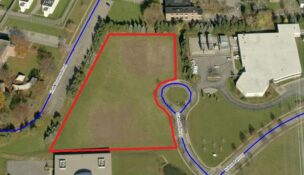
LeChase is currently in the finishing stages of work on the new RRH medical campus in Geneva, transforming the vacant Alleson Athletic facility at 833 Canandaigua Road. The $37 million project is expected to be completed in August.
“That was a building that sat vacant for 20 years,” McKenna said. “So many people have come up to our team and said they couldn’t remember what used to be there, whether it was a grocery store or a warehouse.

“They’re just really appreciative that we’re taking this piece of property and revitalizing it. RRH is putting a beautiful health care facility in the middle of their town, which is essentially a one-stop shop for folks needing care.”
Adaptive reuse can often present challenges, or at least surprises, which contractors don’t encounter with new builds.
“A ground-up project, once you actually get up out of the ground, there are fewer unknowns,” McKenna said. “You need a little bit less contingency on what you’re going to find because there’s nothing there to start with.”
Existing buildings that have been vacant for decades can be a grab bag of adventures. The Victory warehouse in Binghamton, for example, had trees growing through the roof.
“As much due diligence as you can think you do, there are always surprises,” McKenna said. “We’ve had instances where we’ve tested for asbestos and then went up into the ceiling and said, ‘Oh, there’s another ceiling behind it’ and tested that and then when we actually started pulling the ceilings apart, we found there was another third ceiling behind that.”

Even so, turning old into new makes a whole lot of sense — and can save dollars and cents for the developer. Refurbishing an existing building could mean a savings of 25 to 33 percent compared to a new build.
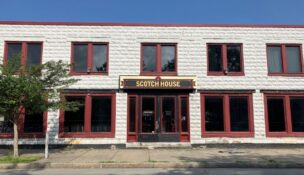
“If you have a building that has good bones to it, it would be a shame to rip it down,” McKenna said. “Even if it’s a 100-year-old building, like the one in Johnson City, structurally it’s a solid, concrete building. You have good foundations, you have a good structure to start with, so a) you wouldn’t want to rip that down and b) sometimes there’s some historical value to it that the neighborhood and the community is proud of.”
There’s often another benefit as well: location.
“These older buildings are typically on the center of Main Street and Main Street, so they’re at a great location,” McKenna said. “That oftentimes means better roads to them, better utilities, better infrastructure surrounding them.
“A lot of times they’re right off an exit because these older buildings were built first and the roads were built around them.”
The RRH medical campus in Geneva will include a host of services, including adult primary care, pediatrics, cardiology, laboratories, orthopedics and urgent care. And the good thing about the project for LeChase: there were no surprises when revamping the existing building.
“This was about as clean as it could have been,” McKenna said. “It was a pretty open warehouse; it didn’t have a lot of walls that things could hide behind.
“Structurally, there were some minor issues that were clear and apparent upon surveys. The structural engineers knew immediately what needed to be fixed and the cost of doing them certainly outweighed redoing an entire building.”
That is, of course, a driving force behind adaptive reuse, which is very much part of the LeChase construction playbook.
“Adaptive reuse allows us to connect the past with the future,” LeChase vice president Kevin Hoffman said. “This medical campus not only preserves the essence of Geneva’s history but also provides a much-needed resource for the community, embodying our commitment to sustainability and meaningful community impact.”
[email protected]/(585) 653-4020
o