Sign In
Upcoming Event
 Free Newsletter

Competency-based education in nursing results in workforce-ready grads
Competency-based education in nursing results in workforce-ready grads


For schools and departments of nursing, 2021 was a pivotal year around curriculum when the American Association of Colleges of Nursing (AACN) announced a new competency-based model and framework for educating nurses.
“The AACN is the organization that establishes the curriculum standards for baccalaureate, master’s and doctoral level nursing programs,” said Bonnie J. Walden, RNC-OB, chair of the nursing department at Nazareth University, who explained that in 2021 the AACN updated their The Essentials: Core Competencies for Professional Nursing Education to embrace a more competency-based approach to nursing education.
The AACN, which has a membership of more than 875 schools of nursing nationwide, defines competency-based education as “a system of instruction, assessment, feedback, self-reflection and academic reporting that is based on students demonstrating that they have learned the knowledge, attitudes, motivations, self-perceptions, and skills expected of them as they progress through their education.”
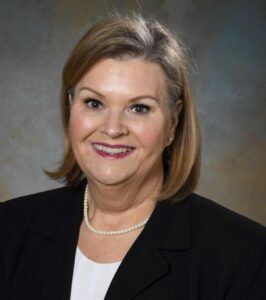
“The whole idea behind competency-based education is that you have a nurse that is more workforce ready, has demonstrated all of these competencies that we say are essential to practice and that their skills are transferable over all spheres of care,” said Tricia K. Gatlin, R.N. Ph.D. dean of the Wegmans School of Nursing at St. John Fisher University.
Among the benefits of a competency-based education according to AACN are student-centered learning, inclusive education, individualized learning, clear expectations, real-world relevance, enhanced faculty-student relationships, collaborative learning, practice readiness and personal growth.
“This type of learning does make the student the center of the learning, and it does make them responsible for their learning, but it also requires the faculty to be able to be in it with the student to be able to give them both formative and summative evaluation feedback,” Gatlin said. “We’ve spent a lot of time in our faculty development developing the faculty and making the rubrics to be able to give both that formative and summative feedback and helping them develop those rubrics to determine what it looks like when a student is competent.”
Local schools and departments of nursing are in various stages of aligning their curriculum to the new requirements outlined in the new AACN Essentials, which must be implemented by the end of 2025.
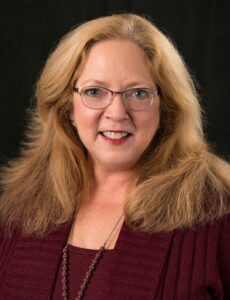
“I think at least in our program, and probably in all nursing programs, there has always been some competency-based education,” said Kathleen Peterson, PhD, RN, chair of the department of nursing at SUNY Brockport. “But I think what AACN is trying to do is just make sure it’s woven throughout the curriculum.”
At Brockport, Peterson and her team are currently mapping the department’s undergraduate curriculum to the new AACN Essentials, identifying gaps and determining what they need to change in the program.
“The other thing is ACN wants us to be able to look at competencies on many different assignments so that you don’t have all exams in one course and that’s the only way a student is showing that they’re competent,” Peterson said. “We’re looking at our assignments to make sure that we have a variety of assignments to measure each competency and each sub-competency of the essentials.”
The shift is a work in progress, Peterson said, but one she believes will ultimately benefit everyone involved including patients, faculty and students.
“I think part of it is meant to help reduce bias and to make sure that we’re being inclusive with all students,” said Peterson about the new AACN Essentials. “To recognize that not all students learn the same and some need to have more formative assessments than others will. Competency-based education is really supposed to be tailored to each student’s need.”
- No items.
At Nazareth, after the new essentials were announced, faculty, led by the curriculum committee in the nursing department, also completed a curriculum mapping process where they looked at what was already being done and what they needed to add.
“We also looked at ways to shift our methodology,” Walden said. “For several of our courses, we’ve now flipped the classroom.”
As an example, Walden says she will ask her students to watch her videotaped lecture or review slides ahead of class so that the classroom time is not spent so much in a traditional “sage on stage” state, but a more interactive one that may include group work, case studies or some type of hands-on experience.
“There’s expectation students ideally spend the same amount of study in preparation for class, but then in class, after I review the material with them, we move right to application and to hands-on experiential learning,” she said.
At St. John Fisher, one of the initial ways the school of nursing approached the new AACN Essentials implementation process was by talking to community constituents to identify competency-based strengths and gaps they see in the school’s graduates. They’ve also bolstered and boosted experiential learning beyond the clinical environment and in their simulation center and classroom learning.
“We pride ourselves at Fisher and the Wegmans School of Nursing in our simulation learning environment and so what we’ve done to enhance what we’re doing in this competency-based education/curriculum model is bring AR and VR into the actual classroom learning environment,” Gatlin said. “And we’ve embedded competency-based rubric into every simulation that we’re doing to find out where the student is in this learning.”
SUNY Brockport and Nazareth University are also incorporating more simulation opportunities into their programs.
“At Nazareth we’re expanding our simulation lab and we’re excited because we got a grant to purchase wearable simulation devices,” Walden said. “We’re partnering with our theater department to have our acting students get credit for being our patients. It’s just another opportunity for our students to get experience and to demonstrate these competencies.”
Caurie Putnam is a Rochester-area freelance writer.
m