Sign In
Upcoming Event
 Free Newsletter

ROI in higher ed: How to get more bang for your college tuition buck

(Depositphotos)
(Depositphotos)
ROI in higher ed: How to get more bang for your college tuition buck


 Listen to this article
What is the value of attending a four-year college or university? Maybe more importantly, what is the value of attending a specific four-year college or university?
One way to answer those questions is by looking at a school’s potential return on investment (ROI) ranking. The Rochester Institute of Technology (RIT), for example, is ranked 170th in the nation on Payscale’s 2024 ROI Report, with financial aid factored in. This ranking also makes RIT the best-ranked for ROI in the Rochester region.
There are many different ROI rankings, but Payscale ranks schools based on the 20-year salary earnings of college alumni minus the total investment to attend that college (factoring in financial aid or not) vs. the 24-year earnings of high school graduates without a bachelor’s degree.
The ROI ranking is not the only way to define a school’s value, though.
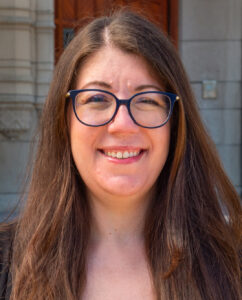
“I think there’s a handful of people who are focused on the rankings, but I think we are actually seeing people broadening what they’re looking for when it comes to value,” said Danielle Bucci, vice president for strategic enrollment, marketing and communications at Nazareth University. “You can find all these rankings online, but what people really want to see is that a school is going to be a good fit.”
At Nazareth, some of the qualities Bucci says make it the right fit for their students are personalization from the beginning of the application process, a strong focus on mental health and wellness and many opportunities for experiential learning.
For example, most undergraduate students are eligible for one $1,500 SPARK (Students Pursuing Academic and Real-world Knowledge) grant, to help make opportunities that can inspire learning, growth, and connections possible.
The grants can be used towards an unpaid or underpaid summer internship; unpaid or underpaid summer research or a Nazareth-approved study abroad or service opportunity abroad any time of year.
And while these opportunities help contribute to the value of their students’ experiences, Bucci says they also contribute to something bigger — the continued value of higher education today.
“As important as it is for me to talk about Nazareth, it’s also really important for me as a higher education professional to still recognize that there is extreme value in a bachelor’s degree and pursuing higher education,” said Bucci, who notes studies that show one’s lifetime earnings with a bachelor’s degree are higher than those without.
At RIT, Prabu David, provost and senior vice president for Academic Affairs, says he’s seen heightened awareness and more focused attention on ROI over the past few years as the cost of higher education increases and so too does student loan debt.
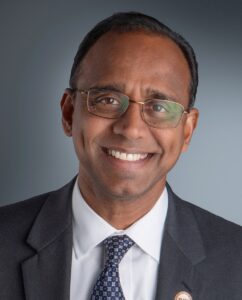
“What students and their families want these days is a relational model,” David said. “It’s about co-creating value. They believe that they are giving the university something of value, which is their money, their time and their talents and in return, they want value that extends beyond the classroom.”
David says one foundational way RIT’s value proposition is unique is its emphasis on experiential learning, which the institution is currently making a concentrated effort to enhance through a greater emphasis on the arts.
“The challenge with an engineering school focusing purely on experiential learning leaves some gaps,” David said. “What we want is a well-trained engineer who is adept at interacting with humans and understanding human needs. Our position here is using a technology, arts and design lens to achieve that.”
At RIT, over 1,000 students participate in arts opportunities annually, including sixty different music and theater courses. First-year applicants in any major can apply for a new non-credit-bearing program that has no required assignments called RIT Art Experience (ArtEx), which offers unique hands-on art experiences.
“It’s for students who are bored just working on the computer and want to use their hands,” David said. “They want to make jewelry; they want to blow glass; they want to get their hands dirty with ceramics. We have created those opportunities for them.”
The hub of RIT’s interdisciplinary arts/tech focus is its Student Hall for Exploration and Development (SHED), which opened in the Fall of 2023 and boosts flexible maker- and performing arts spaces that foster and stimulate creativity, collaboration, and discovery.
“The SHED is emblematic of what we’re trying to do,” David said. “Students can play with technology, but also tinker and make things with their hands. It really enriches the student experience.”
Stacy Ledermann, vice president of admissions at St. John Fisher University says that providing a view of potential ROI begins with the admissions process.

“Students and families understand the investment that they’re making, and they want to see what the outcomes will be,” she said. “We center a lot of our recruitment work on showing students the value to them as an individual and how what we offer as a university can be a match with their academic and career goals.”
The definition of value is quite expansive, she notes, and for many prospective students includes opportunities for mentorship with faculty and leadership and development opportunities like study abroad, research and conferences.
“Students want to know that that development and growth is available to them and that they’ll be well supported throughout those years,” Ledermann said. “And we can demonstrate that through the outcomes of our current students and recent alums.
Post-pandemic, Ledermann said applicants are also looking for opportunities for community and socialization– things they may have lost during their time of lockdown.
- No items.
“They’re looking for that interconnectedness,” Ledermann said. “They’re looking for the ability to be dynamic in groups with their peers, as well as the faculty and staff that they’re interacting with. They want to see those opportunities in their living and learning environment at the university.”
As area colleges and universities prepare to welcome their students to campus for the fall 2024 semester, Ledermann says that for the first time in Fisher’s history, the university has more than seven hundred enrollment deposits from first-year students, making it the most academically qualified and diverse class the university has enrolled.
Caurie Putnam is a Rochester-area freelance writer.
c