Sign In
Upcoming Event
 Free Newsletter

Lan Group founder has finger on pulse of medical start-ups
Lan Group founder has finger on pulse of medical start-ups


 Listen to this article
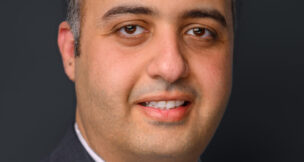
If Derace Schaffer M.D. had inherited his father’s artistic talents, he probably would not have formed the Lan Group, his venture-capital firm.
But, Schaffer said, his entrepreneurial ventures are his creative outlet.
Even when he was young, he was the kid who took pictures at his baseball games and sold the photos to his teammates’ parents. When he was in college, he started a business placing students in summer learning experiences in Europe. While a medical resident, he launched a firm that helped undergraduate students screen medical schools.
Yet he continued on to pursue his love–medicine–and became a radiologist. He worked his way up to chief radiologist at the Genesee Hospital, and helped build his practice, Ide Radiology P.C., into one of the largest in the city.
Along the way, he developed and sold another magnetic resonance imaging practice.
Schaffer was looking for a new project in 1990 when he sold his MRI practice to Medical Imaging Centers of America Inc. He found his answer when he met John Pappajohn at the dinner marking the sale. Pappajohn was a principal of Medical Imaging Centers.
Pappajohn, an Iowa resident, quietly has become one of the largest U.S. investors in new medical and high-technology companies. He and Schaffer hit it off, and Schaffer decided to try his hand at being an investor.
He formed the Lan Group that same year as a vehicle for those investments, and is sole owner of the entity.
Since then, the Lan Group has invested in 17 companies and has made millions of dollars, with an average annual return of 122 percent.
For the first three years, Schaffer made investments in others’ start-ups. One of those–MRC Group Inc., a national provider of medical transcription services–was acquired in September by MedQuist Inc., a publicly traded medical transcription company. MRC this year generated more than $100 million in revenues, Schaffer said.
In 1993, the Lan Group had generated enough money–and Schaffer felt he had gathered enough knowledge–to fund its own start-ups. He and partner Pappajohn have provided seed money for six companies, including Patient Infosystems Inc. in Rochester.
Patient Infosystems, which puts together disease-management programs, went public last year.
Another of the companies, American Physician Partners Inc. of Dallas, is a manager of radiology firms. Ide Radiology has become a subsidiary of the company, which went public last fall.
Another of the companies–LogistiCare Inc. of College Park, Ga.–was set to go public in August. However, the initial public offering has been postponed indefinitely because of market conditions.
The company–which produced $11 million in revenues last year, and is expected to generate $50 million this year and $80 million the next–also has received some interest from businesses that wanted to acquire it. Schaffer said the company is weighing the moves to determine which is best.
The firm makes software that helps entities organize and schedule medical transportation needs.
A fourth business, North Carolina-based Analytika Inc., also is headed toward an IPO. The firm, of which Schaffer is chairman, develops and manufactures data warehousing and mining software to help managed-care entities and pharmaceutical companies.
CEO Thomas Stallings said Schaffer is approachable and mindful, offering suggestions without being overbearing. He does not interfere with daily operations, but is quick to help in any way he can; for example, by making introductions to potential customers. Schaffer, he said, knows many important people in the industry.
“(Schaffer also) is a practitioner,” Stallings said. “He understands the managed-care organizations.”
Schaffer said that is one reason he has no plans to jump full-time into the business world. By staying active in his practice, he can see the real needs of the industry.
And needs there are, he said. There still is plenty of room in medicine to develop sound business practices with sound technology.
The proposals he and Pappajohn fund fill niche needs in the industry–the software to perform functions or outsourced service needs. The eventual goal is for these companies to go public.
His philosophy, which he credits mostly to Pappajohn, is this: Analyze proposals and the market completely. Once a proposal is approved, find investors who are loyal to the idea. Then find excellent managers who you can trust to run day-to-day operations. Stick with the company, adding more money (or loans) or more time as needed.
Management, he said, is the most essential ingredient. Boards cannot run companies; qualified managers must do so, he added.
Schaffer has been approached by other investors who would like to see him take his investment returns and form a venture-capital fund. But Schaffer is not ready to share control with a board of directors.
His enthusiasm for investing comes from the analysis and decision-making involved in the process, and feeling in control of his investments.
“I’m not interested in being a passive investor,” he said.
Schaffer and Pappajohn serve on the boards of the six start-ups.
Schaffer would like to have more Rochester companies in his portfolio. Patient Infosystems is the only one of his start-ups located here.
“There are many solid, talented people here with excellent ideas,” he said.
Schaffer said he is able to handle both medicine and the Lan Group–named for his maternal grandmother’s maiden name, which subsequently became his middle name. He described himself as a “seven-day-a-week” person who needs to be occupied with activities.
He finds the analysis behind business deals stimulating and fun, but he expects the same positive results from the ventures as he does from his medical practice.
“Obviously, he’s quite the perfectionist,” Stallings said of Schaffer. “Just look at his accomplishments. He expects a great deal, and that’s fine. He listens well, and he’s thoughtful.”
10/9/98