Sign In
Upcoming Event
 Free Newsletter

VOA Upstate NY expands reach under CEO Junior Dillion
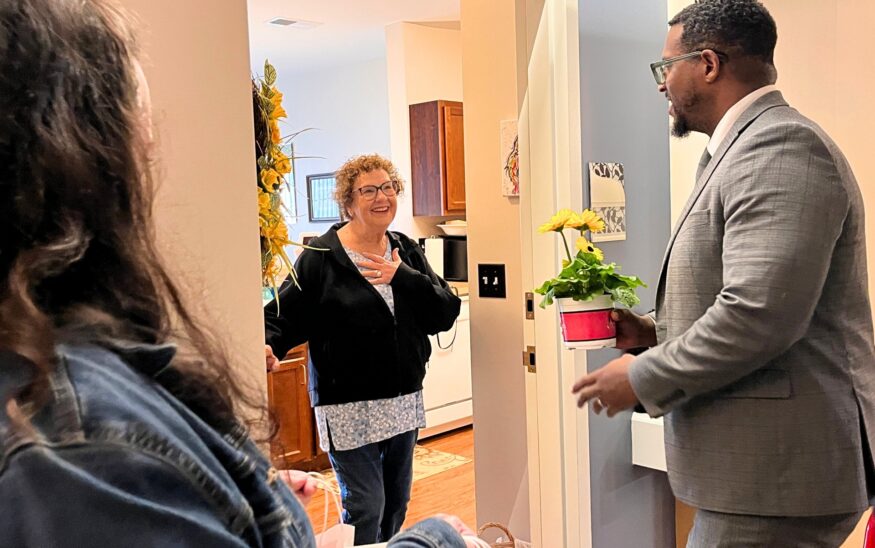
Dr. Junior Dillion is an advocate for safe, stable housing, which is a cornerstone of Volunteers of America Upstate New York. (Photo provided by VOA Upstate NY)
Dr. Junior Dillion is an advocate for safe, stable housing, which is a cornerstone of Volunteers of America Upstate New York. (Photo provided by VOA Upstate NY)
VOA Upstate NY expands reach under CEO Junior Dillion


 Listen to this article
Key takeaways:
- VOA Upstate New York has doubled the number of people served to 10,000 annually under CEO Junior Dillion.
- Integrated services—including housing, childcare, reentry programs and food access—are central to its growth strategy.
- Federal funding uncertainty remains a major risk, particularly for supportive housing programs.
- Business community engagement and philanthropy are critical to sustaining and expanding services in the Rochester region and beyond.
Dr. Junior Dillion has built his leadership approach around a simple but powerful idea: housing is foundational to everything else.

As president and CEO of Volunteers of America Upstate New York, he is steering the organization through a period of rapid expansion while broadening its role as a comprehensive human services provider.
Part of the broader Volunteers of America network, now marking its 130th year, the Upstate New York affiliate has evolved well beyond traditional shelter services.
Dillion has prioritized a holistic model that integrates supportive housing, childcare, youth education, food access and reentry services, which all address the interconnected challenges that often accompany housing instability.
Under Dillion’s leadership, Volunteers of America Upstate New York has emerged as a leading force in addressing one of the Rochester region’s most pressing challenges; access to safe, stable housing.
Dillion, who took the helm in May 2023, has guided the organization through a period of significant growth and transformation. His approach is rooted in a holistic philosophy—“housing is health”—recognizing that stable housing underpins outcomes in employment, education and overall well-being.
That philosophy has been translated into a measurable impact. Over the past three years, VOA Upstate New York has doubled the number of individuals it serves annually, growing from 5,000 to 10,000 people. The organization now stands as one of the largest supportive housing providers in Monroe County. The organization also works in Broome County and most recently, Tompkins County.
That impact has not gone unnoticed. Local leaders recently proclaimed March 8, 2026, as Volunteers of America Day, recognizing the organization’s regional influence and community impact.
Originally from Birmingham, England, Dillion has more than two decades of nonprofit experience and extensive expertise developed while working across a variety of human service systems, including the British Criminal Justice System, outpatient service, settlement projects and community college settings.
Additionally, Dillion is a licensed therapist with a Ph.D. in Human Development and Education from the University of Rochester.
His background has helped spur VOA’s growth, which reflects both rising demand and a strategic shift toward an integrated service delivery.
Beyond emergency shelter, the organization offers a comprehensive suite of programs, including supportive housing, childcare, youth education, food access initiatives and reentry services for individuals transitioning from incarceration. A hydroponic farm on its Lake Avenue campus further supports food security efforts, providing fresh, locally grown produce to those in need.
The organization’s expanding footprint is backed by operational scale, with roughly 170 employees and an annual budget of $17 million.
Strategic partnerships have played a key role in that expansion. Collaborations with organizations such as Jordan Health, for example, enable VOA to offer on-site dental care for children at its Children’s Center. These partnerships help remove barriers that often prevent individuals and families from achieving long-term stability, Dillion noted.
Enna Pietrantoni, board chair, said Dillion is a good fit for the organization, describing him as “a forward‑thinking and transformational leader whose vision has meaningfully shaped the direction of our organization.”
“He leads with empathy, creativity and a deep commitment to community service, guiding Volunteers of America Upstate New York through an important period of growth and renewal,” Pietrantoni said, adding that Dillion has also successfully led the organization toward stronger financial footing, ensuring stability while positioning VOA Upstate New York for long‑term sustainability. “His ability to pair compassionate, mission‑centered leadership with sound operational and financial stewardship has elevated both our impact and our readiness for the future.”
Looking ahead, Dillion said VOA is investing in further growth. Plans to develop affordable housing aim to increase supply while reinforcing the organization’s long-term presence in the Rochester market. The initiative aligns with broader regional efforts to address housing shortages and affordability challenges.
Despite this progress, challenges remain. Dillion points to the uncertainty of federal funding as a key risk factor, particularly for supportive housing programs that rely heavily on government support. Reductions in funding could have far-reaching consequences, potentially increasing homelessness and placing additional strain on health and social service systems.
To mitigate these risks, VOA is prioritizing advocacy and collaboration with peer nonprofits, while also seeking deeper engagement with the business community.
Rochester’s strong philanthropic culture, he said, presents an opportunity for private sector partners to play a meaningful role in sustaining and expanding critical services.
Internally, workforce support remains a priority. As demand for services grows, ensuring staff have the resources and support they need is essential to maintaining program quality and organizational sustainability.
“We couldn’t do any of it without our team,” Dillion said.
[email protected] / (585) 653-4021
n