Sign In
Upcoming Event
 Free Newsletter

AI, DEI, noncompetes reshape NY employment law

NY labor and employment law evolves fast in 2025 amid AI regulation, DEI policy shifts, non-compete bans, and increased wage and hour litigation. (Illustration by Depositphotos)
NY labor and employment law evolves fast in 2025 amid AI regulation, DEI policy shifts, non-compete bans, and increased wage and hour litigation. (Illustration by Depositphotos)
AI, DEI, noncompetes reshape NY employment law


 Listen to this article
Key takeaways:
• AI in hiring and HR is prompting new compliance laws in NY
• Employers face growing divergence between state and federal laws
• Noncompete agreements under legislative threat in New York
• DEI initiatives face federal rollback but remain a state priority
As 2025 advances the pulse of activity in the labor and employment law sector remains incredibly strong — especially in New York State — according to six local attorneys who specialize in this work.

“We’re in an era of accelerated change, marked by regulatory volatility and innovation,” said Wende J. Knapp, a partner at Woods Oviatt Gilman, who is the head of the employment law practice group. “Nationally — and especially in New York — the labor and employment landscape is being reshaped by tech disruption, shifting policy agendas, and cultural tension points.”
From pending AI governance laws and renewed scrutiny of noncompete agreements to the chilling effect of executive rollbacks on DEI initiatives, the pace of change is forcing employers to rethink compliance frameworks in real time, Knapp said.
“More than ever, legal risk management requires anticipation, not just reaction,” she said. “In New York, we’re seeing legislation that’s ahead of the federal curve, particularly in areas like pay transparency, worker protections, and regulation of algorithmic tools in HR. The result? A moment of transformational pressure, but also real strategic opportunity for forward-looking organizations.”
In her own practice, Knapp sees AI and accountability; power dynamics in the workplace; and the post-pandemic reckoning, as the biggest drivers of labor and employment law activity right now.
“Artificial intelligence isn’t a future problem; it’s a current compliance issue,” she said. “Employers are already using AI in hiring, performance management, and productivity monitoring. In response, New York is proposing legislation like A5429, which would require formal AI impact assessments and even impose penalties for job displacement driven by automation.”
While using the latest tech tools such as AI can be transformative for employers, employers can also expose themselves to liability if they’re not aware of the pitfalls that come with using AI in the workplace, particularly in HR, Knapp notes.
“Union activity is on the rise, but it doesn’t stop there,” said Knapp, on the issue of power dynamics in the workplace. “The NLRB [National Labor Relations Board] has continued to expand employee protections across both unionized and non-union settings. New York has similarly enhanced rights for freelancers, whistleblowers, and employees speaking out against discrimination.”
Knapp explains this means employers need to be aware about whether their practices and policies are keeping up with this power dynamic.
And in the area of the post-pandemic reckoning, she’s seeing businesses navigating complex terrain: return-to-office mandates, flexible work arrangements, and evolving leave policies, all while employee expectations continue to evolve faster than most handbooks.
“Right now, employers are wise to revisit their organizational culture, on-site workforce requirements, and strategic objectives to balance the needs of the organization with the new expectations of the current workforce,” she said.
The future of noncompete agreements remains a high-stakes watchpoint for employers, Knapp says, explaining that while the FTC’s proposed national ban has stalled, momentum overall hasn’t faded.
“New York State continues to push for legislation that would eliminate most noncompetes, with narrow exceptions,” she said. “Whether these laws survive legal challenges or not, the trend is unmistakable: workforce mobility is top of mind. Employers should consider redesigning restrictive covenant strategies now, with a sharper focus on trade secret protection, retention incentives, and targeted non-solicit clauses.”
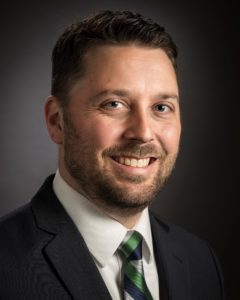
Benjamin E. Mudrick, a partner at Harter Secrest & Emery, who leads the firm’s labor and employment practice, says the pulse of labor and employment law right now is one of unprecedented uncertainty.
“The Trump administration is making really significant changes in the way that they intend to enforce employment laws, but it’s being done through executive orders and agency guidance, so it doesn’t necessarily have the same force of law as a change in actual legislation,” Mudrick said.
Due to some of the big changes that the Trump administration is trying to make, Mudrick sees the distance between New York state law and federal law growing wider when it comes to employment matters.
“Employers find themselves in a position where they can have conflicting laws or requirements or guidance about the same issue, depending on which level of government they’re looking at,” Mudrick said.
He is seeing this most prominently in the DEI sphere.
“Employers are really trying to figure out what they have to do with respect to diversity and inclusion,” Mudrick said. “How can they ensure that they are treating their employees fairly and in compliance with the law, without also inadvertently violating what the Trump administration views to be illegal DEI programs.”
Overall, some questions are coming up for HR professionals and employment lawyers that six months ago would’ve had easy answers, Mudrick said, but are now more complex. He says employers should err on the side of caution and reach out to counsel with questions and not forget about the basics.
“The biggest potential liability that any employer faces in the employment law field is still a massive wage and hour claim involving how they pay employees,” Mudrick said. “So while employers are focused on some of these changes with the Trump administration, like DEI and non-discrimination, they shouldn’t lose sight of the fact that those types of claims are less likely to result in the types of liabilities that failing to pay overtime or tracking hours correctly would.”
Amy Habib Rittling, a partner at Lippes Mathias who serves as team leader for the firm’s employment practice team, says that since the Me Too movement started, labor and employment law has been one issue and hot topic after another that has kept the practice area moving at a rapid speed.

“There’s always a pulse in labor and employment law,” Habib Rittling said. “It shifts and changes at times, but there is always a pulse, and that is actually why I find this area of law to be so fulfilling and rewarding.”
She also says we’re currently in a period of increasing divergence between the federal government and some state governments, including New York, when it comes to labor and employment issues such as DEI initiatives.
“We have some clients that are authentically and firmly committed to DEI initiatives,” Habib Rittling said. “They care about their workforce and employees in those areas and don’t want to necessarily pull back but are wanting to make sure that they’re not in the crosshairs of the federal government.”
This is just one area Habib Rittling says she and her team are monitoring closely to ensure that these companies and their DEI policies and programs are not going to be subject to challenge but also allow them to still do what they feel is important and right to their workforce.
“Putting aside the changes we’re seeing right now in the federal government, I’d say that the top three buckets of claims and litigation we’re seeing are sexual harassment; misclassification across the board, whether it’s overtime, wage and hour, or independent contractor employee; and noncompetes,” Habib Rittling said.
Scott Rogoff, a partner at Barclay Damon, who serves as the firm’s hotels, hospitality and food service team leader, says his group is very busy and it stems foundationally from the businesses they work with wanting to do the right thing.

“Laws are always changing and regulations are always in effect regardless of whatever administration is the office,” Rogoff said. “Folks we work with want to know the new laws, the new regulations and how to comply with everything. And at least in our experience, it’s not just because they want to do what law requires, but because they want to create a positive work environment.”
Rogoff also attributes some of the activity right now to the ever-growing interest of employees in topics related to labor and employment and access to information about them.
“Employees, I think, are more educated than ever,” he said. “They have access to more information than they ever have, whether it’s reading blogs, going on the internet, or asking friends. We get a lot of calls from employers who will say, ‘Employee X sent me an article today. Do we have to comply with that?’”
Types of claims he’s seen more activity in currently are sexual harassment claims, disability discrimination and race discrimination.
“We’re also seeing a lot of wage and hour activity in the hotels, hospitality and food service practice group because it’s very nuanced and there are regulations that deal with that industry that are different than dealing with every other industry,” he said. “So we’re getting a lot of calls about that.”
And while Rogoff typically represents employers, he notes that wage and hour issues are critically important to both parties.
“Employees want to go to an employer that is compliant with the law,” Rogoff said. “They know that if they get a job at a particular place their wages are going to be correct and the classifications correct and that makes the employer more attractive and more marketable. So, it all kind of comes full circle.”
Scott D. Piper, a partner at Harris Beach Murtha, who co-leads the firm’s labor and employment practice group says, from his perspective, the firm’s client base is seeing more of an uptick in labor and employment activity.

“Definitely a large portion of this activity is counseling, but also claims filed against employers, especially in New York in the State Division of Human Rights,” Piper said. “There seems to be a lot of State Division of Human Rights activity these days.”
With the new federal administration issuing DEI-related executive orders, Piper is seeing more claims related to what in the past would be referred to as “reverse discrimination” and more activity around religious accommodation.
“Another thing we’re seeing a lot of that we didn’t see before the pandemic was a lot of remote work-related questions,” Piper said. “Today, employers with remote workers outside of New York now have to be concerned about other states’ laws and regulations, whereas, in the past, they only had to be concerned about New York’s if their employee base was only in New York.”
One of the many areas Piper and his team are watching closely on a state level is legislation currently in committee that could significantly limit noncompetes in New York should it be signed by Governor Hochul.
“This is definitely an issue that’s going to majorly affect our clients as we have a ton of clients that use noncompete agreements to protect their business,” Piper said. “Depending on what the bill ultimately says that the governor signs — and we assume she’s going to sign one — could significantly impact businesses in New York and it will significantly impact, I think, whether businesses want to come into New York.”
Kevin Mulvehill, a partner at Phillips Lytle, who serves as team leader for the firm’s employment practice team says the demand for labor and employment lawyers has increased and is expected to continue to increase.

“Currently, some of the biggest drivers of labor and employment law include disloyal employees, a resurgence of unionization, class and collective actions, wage and hour, alleged unlawful terminations and breach of contract,” Mulvehill said.
One issue Mulvehill says that New York employers should be paying close attention to is that in New York State, the legal standard for what constitutes unlawful harassment in the workplace is no longer severe or pervasive conduct.
“In addition, it is no longer a defense that the individual failed to make a complaint about the harassment,” Mulvehill said. “In some circumstances, this could be viewed as a positive development. However, in practice, it amounts to employer’s having to go to trial or hearing for cases relating to any conduct that: (1) is little more than petty slights or trivial conveniences; and (2) they were not aware of.”
As a result, Mulvehill says it is important that employers closely monitor employee relations and their workplaces. An issue Mulvehill and his team are closely monitoring is noncompetes.
“The NLRB was very active during the Biden administration by, among other things, implementing restrictions on noncompete agreements and severance agreements,” Mulvehill said. “Since the current administration took over we have seen significant shifts in the NLRB’s interpretation of the law. Our team is monitoring these developments closely.”
Caurie Putnam is a Rochester-area freelance writer.
a