Sign In
Upcoming Event
 Free Newsletter

Brighter days ahead for Rochester’s heart care patients

(Depositphotos)
(Depositphotos)
Brighter days ahead for Rochester’s heart care patients


A report released in June 2024 by the American Heart Association shows that more than six in 10 U.S. adults will have some type of cardiovascular disease by 2050, driven by increases in coronary heart disease, heart failure and stroke.
As the number of Americans needing heart care grows, how are Rochester’s hospitals improving outcomes for patients? We checked in with cardiologists from Rochester Regional Health and the University of Rochester Medical Center to find out.
“I think the way you improve outcomes in a city like Rochester, which is not dissimilar to most upstate cities, is that you first need to improve access,” said G. Randall Green, MD, JD, MBA, executive medical director, Sands-Constellation Heart Institute, Rochester Regional Health.
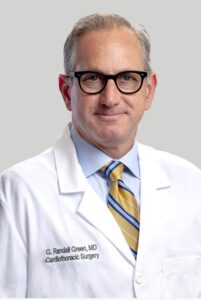
This access comes in the form of primary care physicians and cardiologists, which Green notes can both be challenging to find and why Rochester Regional Health will be focusing on – over the next few years – attracting more talent to the region.
“That’s how you change the health of a population,” he said. “You just start by getting people seen by the right high-quality provider.”
Green recently returned to Rochester himself after several decades working in other areas. After graduating from Northwestern University’s Feinberg School of Medicine and completing his training, his first heart surgery job was at Rochester Regional Health.
He assumed the role of executive medical director of Rochester Regional Health’s Sands-Constellation Heart Institute in May 2024.
“One thing that I think stood out to me when I came back is that Rochester Regional offers, by virtue of its providers, the entire scope of cardiovascular care, from very niche, nuanced forms of cardiovascular disease, to coronary, artery, disease, and valvular disease,” Green said.
He has been thrilled with the clinical team in place and looks forward to supporting and growing it, as well as expanding the resources available to them and their patients.
“They’re an extremely talented group of clinicians, from cardiac surgery to interventional and general cardiology,” Green said. “We’re going to invest in making sure that folks not only can get in to see a physician to be seen examined but have access to some of the most sophisticated imaging so that we can shorten the time between signs or symptoms of heart disease and a diagnosis.”
Green is also excited to reintroduce robotic surgery at Rochester General Hospital, which he did about twenty years ago when he first practiced here. Robotic surgery is a type of minimally invasive heart surgery that utilizes small incisions and is performed by a surgeon using tiny, precision-guided instruments.
“We’ve just brought on staff a brand-new surgeon who is a robotic heart surgeon, so we’ll be bringing back to Rochester the opportunity for our community to benefit from robotic heart surgery very, very soon, in the next couple of months,” he said.
The organization is also continuing to further develop its preventive cardiology division and embed it in its ambulatory cardiology practices and support it with the addition of precision medicine.
“We’re in the process of working with a company that will allow us to identify folks with very high risk of certain cardiovascular diseases that we can manage before they even show signs of the disease, which is pretty exciting,” Green said.
Bryan Henry, M.D., is a practicing cardiologist for UR Medicine Cardiac Care who also helps direct, coordinate and manage the university’s cardiac care for the region. He says access to care is critically important when it comes to cardiology.

“Cardiovascular disease is the leading killer of both men and women across all demographics in the U. S. and it encompasses the spectrum from chronic progressive heart failure to acute heart disease to cardiovascular emergencies that require immediate intervention,” Henrey said. “Access to care is a critical portion of battling and preventing disease.”
Henry notes that there’s been a lot of research on health disparities that has shown disadvantaged neighborhoods and geographic regions that have poor access to healthcare have higher incidences of cardiovascular disease and worse outcomes with regard to different interventions and readmission rates to the hospital.
“Our own experience and our data confirm this,” Henrey said. “We’ve seen that the outcomes for the more affluent communities and suburbs of Rochester, their cardiovascular outcomes tend to do better than the inner city and the more remote geographic areas.”
The university’s cardiac care division has long recognized that access to high-quality health care services is a key strategy to improve outcomes and help level the playing field, Henry explained, and that there’s been great effort and resources put forward over the years to expand services throughout the region.
Most recently, in October 2024 UR Medicine opened a $25 million, 45,000-square-foot medical outpatient building in Geneseo, Livingston County that offers primary care, labs, outpatient procedures and specialty services, including cardiology.
“Just over the last three years the university’s cardiac care division has hired four new cardiologists with another two to three more cardiologists to be hired in the next few years to make up a team right now of twelve regional cardiologists, thirteen nurse practitioners and physician assistants, 60 registered nurses and tech support staff that all support the regional cardiology division,” said Henry, pointing to increased access to cardiac care providers across the network. “And they’ve partnered with all five of the smaller regional hospitals to now have ten offices scattered throughout the region, as far south as Olean.”
Henry appreciates the importance of these regional partnerships that have greatly increased the university’s capabilities, diagnostics and ability to manage more complex patients in the region.
“The regional part of the cardiac care division accounts for about a third of all the volume for the whole medical center, and it’s the fastest growing division,” Henry said. “I think the university will continue to focus its mission on helping to improve access to all the communities in upstate New York.”
Caurie Putnam is a Rochester-area freelance writer.
n