Sign In
Upcoming Event
 Free Newsletter

The Esther Project helps women rebuild with faith and care
The Esther Project helps women rebuild with faith and care


 Listen to this article
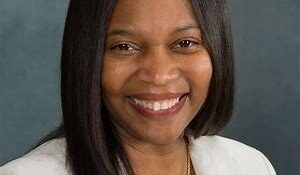
For Cheryl Snead, the work of the Esther Project is not just a job — it’s a calling rooted in personal experience, enduring faith and a deep commitment to community. As she puts it, “We’re in full swing with just about every program that we have.” And those programs — ranging from transitional housing to teen education — are changing lives every single day.

Snead’s story begins not as a nonprofit founder or mentor, but as a young, homeless woman five months pregnant, alone and scared.
“I think it was like 16 days,” she said, reflecting on a moment in 1984 that reshaped the rest of her life. “But my story could have been very different.”
Stranded at the Charlotte, N.C. airport with just $11 to her name, Snead encountered the kindness of strangers — Reverend Sonny Turner and his wife — who took her in, treated her like family and helped her find shelter.
That brief, pivotal moment planted the seed for a lifetime of service.
A home and a mission
What began as an informal ministry—taking friends and family members into her own home — grew organically into what is now The Esther Project, a nonprofit dedicated to helping women transition out of homelessness and into sustainable, independent lives.
The Esther Project gets its moniker from the Bible story of Esther, who was a Jewish woman who used her position as queen to save the lives of thousands of Jews.
“When we bought our first house, friends started staying with us,” Snead said. “A friend from Buffalo. A sister. My mother. My dad. A woman from church and her son—for nine months. And we realized, this is a thing.”
That “thing” became official in 2016, when the Sneads used the last of their retirement savings to purchase a home on Dayton Street in Rochester intended to be used as transitional housing. Though the house is not yet fully operational due to funding challenges, the mission hasn’t stopped. Instead, the Esther Project works with landlords to rent furnished rooms to women in crisis, providing not just shelter but continued mentorship, life skills training and community support.
From city schools to systemic solutions
Much of Snead’s approach to building meaningful, hands-on programs comes from her years working in the Rochester City School District. At School 23, she saw what was possible when a well-resourced parent network supports students. But her move to School 22 was an eye-opener.
“I must have been living in a bubble,” she recalled. “I did not know poverty on that level existed.”
Snead described students coming to school with no coats in the dead of winter, children living without furniture and file cabinets full of clothes categorized by size and grade for children who arrived in soiled or inadequate clothing.
“I was undone,” she said. “It broke me.”
She responded in the only way she knew how—by rallying. A single email to seven friends asking for coats and mittens sparked a viral wave of donations from across the country. Every student at School 22 received a brand-new coat. One generous donor funded a sixth-grade trip to the Corning Glass Museum—an experience many of the students had never imagined.
From that experience, Snead saw the power of collective action and the importance of stepping beyond institutional limits.
“I’m just a catalyst,” she said. “I know how to get people going.”
Educating, equipping, empowering
Today, Snead’s impact stretches beyond housing. One of her proudest achievements is the P31 Girls Program—named after Proverbs 31—which teaches hygiene, etiquette, financial literacy and life skills to young girls.
“We’re teaching them how to sign their names, how to write a check, how to network, how to sit at a dinner table with confidence,” she explained. “You may end up at the White House—so you better know what fork to use.”
The curriculum is ever evolving. Snead tailors it to meet the real needs she sees in her community: budgeting, apartment upkeep, tenant rights and choosing abstinence as a means of avoiding the cycle of teen pregnancy and homelessness seen in our community.
These aren’t just abstract lessons. They’re life-saving skills.
“I’ve had women leave apartments because the landlord wasn’t fixing things, or they didn’t know how to advocate for themselves,” she said. “So, I put together a housing manifesto—what to look for, who to call, how to stay housed. We have to teach people how to survive.”
Unlike traditional social workers who clock out at five, Snead is available at all hours—fielding late-night calls, helping young mothers navigate city services and even teaching women how to grocery shop.
“One girl just stood there at Aldi,” she said. “She told me she didn’t know the last time she was in a grocery store. Her mom only used food pantries. She didn’t know how to shop.”
The Esther Project follows a human-centered model that prioritizes ongoing relationships and real-world guidance. From organizing a closet to understanding a lease, the work is as practical as it is personal.
Advice to future change-makers
For those looking to launch their own mission-driven organizations, especially women of color, Snead’s advice is simple: “Don’t do this blind.”
She encourages aspiring leaders to “get your hands and feet wet” and seek mentorship.
“Find trusted voices in your field who are doing the actual work,” she said. “And lean on cohorts and community. You can’t do this alone.”
Above all, Snead emphasizes faith. “I don’t do anything without talking to God about it first,” she said. “My work is rooted in faith. It’s about loving people and taking care of the poor, the widows, the orphans — just like the Bible says.”
As she continues to build, teach and support, Snead shows no signs of slowing down. The Dayton Street house remains a work in progress—but it’s emblematic of the journey she’s on: steady, faith-fueled and driven by love.
“I truly believe a lot of the suffering we see can be cured if we all did our little bitty part,” Snead said. “If everyone just did something — we could change the world.”
And in Rochester, one woman already is.
n